CROSSING the Steinerne Brücke in Regensburg - in Bavaria, Germany - the bridge that has carried people across the Danube for nearly nine centuries, the relationship between a city and its own past becomes unexpectedly legible.
The stone façades of the old town rise on either bank - dense, ordered and readable without effort.
The UNESCO inscription (here) came in 2006, but the city’s confidence in its own character long predates any formal recognition.
Regensburg does not need a listing to know what it is.
Edinburgh will understand some of this.
We live in a city of layered history, where the relationship between old and new is rarely simple and never without argument.
The Festival of Europe Scotland, which runs this month, offers an invitation to look outward - not for novelty, but for honest comparison.
Across Europe, cities with histories as complex as our own are grappling with the same pressures: how to grow, how to house people properly and how to expand without eroding what makes them worth living in.
None of this is easy. All of it is possible.
It is in this spirit that The Cockburn Association is contributing to the festival with a focused discussion on one of the most pressing issues facing historic cities today.
‘Homes or homecomings? Managing tourism tensions’ brings together perspectives from across the continent to explore how cities like Edinburgh can balance visitor economies with the needs of residents - addressing questions of housing pressure, short-term lets and the long-term sustainability of living communities.
The event forms part of a wider European conversation about responsible tourism and civic responsibility.
This four-part series explores four cities. The others are Lyon Confluence: what a governing idea looks like and what happens without one; Vienna: on what a city says about itself when it builds homes for ordinary people; and Hammarby Sjöstad: on closing the gap between what plans say and what buildings deliver.
Each offers a specific lesson. Taken together, they put a question to Edinburgh that we have not yet answered convincingly: are we expecting enough from the places we are shaping?
Regensburg is the right place to begin because it resists the most tempting response to a precious historic city, which is to treat it as a museum.
The Old Town is protected, yes - but protection is not confused with stasis.
The city’s ambitions show most clearly not within the historic core, but in the buffer zones and development sites that connect the medieval centre to the wider city. These transitional territories are where planning convictions are really tested.
Here, new development is expected to meet demanding standards.
Scale, materials and urban grain matter.
Architectural competitions are used routinely to select designers on the basis of talent rather than price.
Social mix is taken seriously too: a meaningful proportion of housing in these areas is affordable, ensuring the city remains inhabited by people of different means, not only by those who can afford to live inside a postcard.
Authenticity is not only architectural. It is social.
A city of beautiful empty buildings, inhabited only by the wealthy, has already lost something that no amount of conservation can recover.
Edinburgh knows this tension without having resolved it.
The Old and New Towns - World Heritage Site since 1995 (here) - are under quiet but sustained pressure: tenements converted wholesale into short-term lets, working households displaced from the centre, development proposals contested in the setting of Calton Hill and along the Cowgate.
These are not abstract planning debates. They are questions about who gets to live here and in what.
The more revealing comparison with Regensburg, though, lies not in the historic cores of either city but in what surrounds them.
Edinburgh’s equivalent areas - the edge of the New Town, the hinterland of Leith’s conservation area, sites along Leith Walk and Easter Road - have produced a troubled record.
Small-scale successes, yes: careful infill where individual architects were given the latitude to work well. But too much development that was approved for avoiding the breaking of rules, rather than for achieving anything worth having.
The architecture critic, Owen Hatherley, writing in Prospect magazine, here (in 2017), wrote, in an article headed, ‘The slow ruin of Edinburgh’, that “the pattern has been large-scale disasters and small-scale triumphs”.
Leith Shore - unfussy infill between older buildings - has worked. Much less so the vast Western Harbour, built during the ‘pre-crash’ years with speculative flatted blocks in materials that have worn badly in the North Sea climate.
‘Failures’ do not happen because Edinburgh lacked the skill to do better.
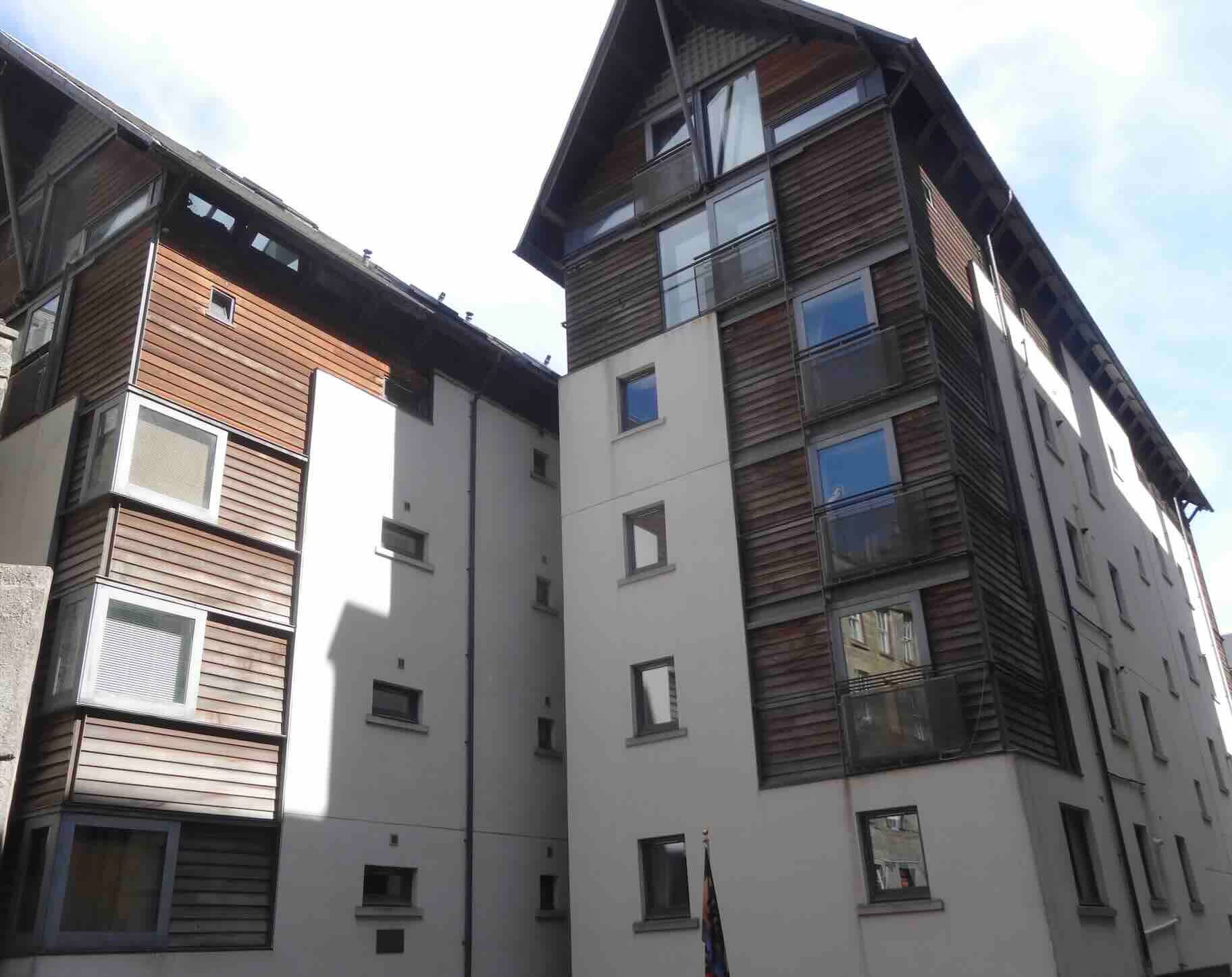
A clue might be found in an article published (here) by The Scotsman newspaper in 2014, where celebrated and highly-decorated local architect, Richard Murphy, was quoted saying that Scotland was “about the worst place in Europe to be an architect” - not for want of talent, but because public procurement selects architects by price.
He is further quoted, as saying: “Germany, Scandinavia and the Netherlands almost always have design competitions for new buildings – and are not spending ridiculous amounts.”
The 17 schools built across Edinburgh under Private Finance Initiative contracts illustrate the point.
All were temporarily closed following the collapse of a wall at Oxgangs Primary School in 2016, after inspections revealed widespread structural defects. The episode (reported here, by the BBC) shows how poor procurement, fragmented responsibility and inadequate quality assurance can result in unsafe buildings.
Regensburg’s approach is not impossible to emulate. High expectations, applied consistently, create cumulative quality over time.
The development sites surrounding Edinburgh’s World Heritage core - in Leith, Granton, the Canonmills area north of the New Town - are not peripheral to the heritage argument. They are part of it.
The character of a historic city is shaped by what it adds, not only by what it keeps.
Edinburgh has the talent.
What is too often denied to its best practices is the kind of public commission that a rational procurement system would deliver to them.
Regensburg has decided what it expects of the places that surround its heritage, and it expects it consistently.
That is, stripped back, the whole lesson.
James Garry is assistant director at The Cockburn Association
This is an edited version of article that appeared yesterday, here, on the Association’s website, for which grateful thanks.
Image details: Old Fishmarket Close (a Richard Murphy design, here); copyright Mike Wilson
Important notice: Now that we have reached the first anniversary of the site, you can show your support by pledging either a monthly sum of £3.50 or an an annual one of £30 - to help pay for some solid journalism (including the commissioning of freelancers).
Paying subscribers will be eligible for exclusive content and also access to webinars and online discussions as to what content to pursue.
If you are not yet a free subscriber, go to BuildEdinburgh.Substack.com and choose the paying subscription option. Or click the button above and take it from there.
However, if you are already a free subscriber, click the button above that says ‘upgrade to paid’.
Thanks, in anticipation, Build Edinburgh


