

THE idea of tenant participation in how ‘social housing’ is managed is not a new one in Edinburgh, including at ‘registered social landlords’ like Lister and West Granton housing co-operatives, where the management committees are entirely made up of tenants.
Indeed, following the Housing (Scotland) Act 2001, all registered social landlords (RSLs) and local authorities in Scotland must now have “a tenant participation strategy which will enable continuous improvement in landlords’ performance in supporting and enabling tenants to participate”.
Quite how effective the legislation has been is now the subject of a research exercise - called ‘State of Play’ (here) - by the membership organisation, Tenant Information Service, which says: “The findings will be used to inform future discussion and learning across the sector, including recommendations for how tenant participation can continue to develop in a changing environment.”
Edinburgh - where 20,541 ‘council houses’ make up eight per cent of the city’s 264,990 dwellings (as at March two years ago - here) - has had a long tradition of tenants’ concerns being given a voice through organisations such as the Edinburgh Tenants Federation (ETF), the Community Alliance Trust, and, more recently, Living Rent.
Indeed, among them, ETF contributed to the city council’s 2025-2028 Tenant Participation Strategy, here, with Betty Stone, ETF’s convener, a co-author of the document’s foreword.
Among the core principles identified in the strategy is taking feedback from tenants and having them scrutinise the services they receive. In practice, this should mean additional ways in which resident views will be collected, and new panels to scrutinise service delivery.
While, of course, we should welcome any efforts to find ‘better’ ways to engage with tenants, it is vital to ensure that feedback and scrutiny don’t end up as a box-ticking exercise. As it is, providing feedback and scrutiny is, almost by definition, input collected after the fact.
Therefore, it begs the question: could we not go further and make sure tenants have an active voice at the design phase of a housing development, a statutory role in decision-making around their own housing?
Marking a housing provider’s performance is one thing; being on a design or management committee is another.
Our democratic model rests on lay decision-makers being advised by technical experts - so there is no reason why this can’t apply to residents too, who also bring their everyday, lived experience.
Giving real power to tenants would help ensure that the allocation of resources always centres on residents’ needs, including the provision of additional support such as fuel poverty assistance and community mentorship.
So, how might this kind of ‘tenant participation’ help tackle Edinburgh’s declared housing emergency?
Firstly, we need to keep in mind that Edinburgh’s housing stock is getting old, with the latest Scottish House Condition Survey reporting 43 per cent of properties in the city as older than 1945.
The next few years will require us to massively invest in retrofitting, to ensure that homes are still fit for purpose as temperatures become more extreme with our changing climate.
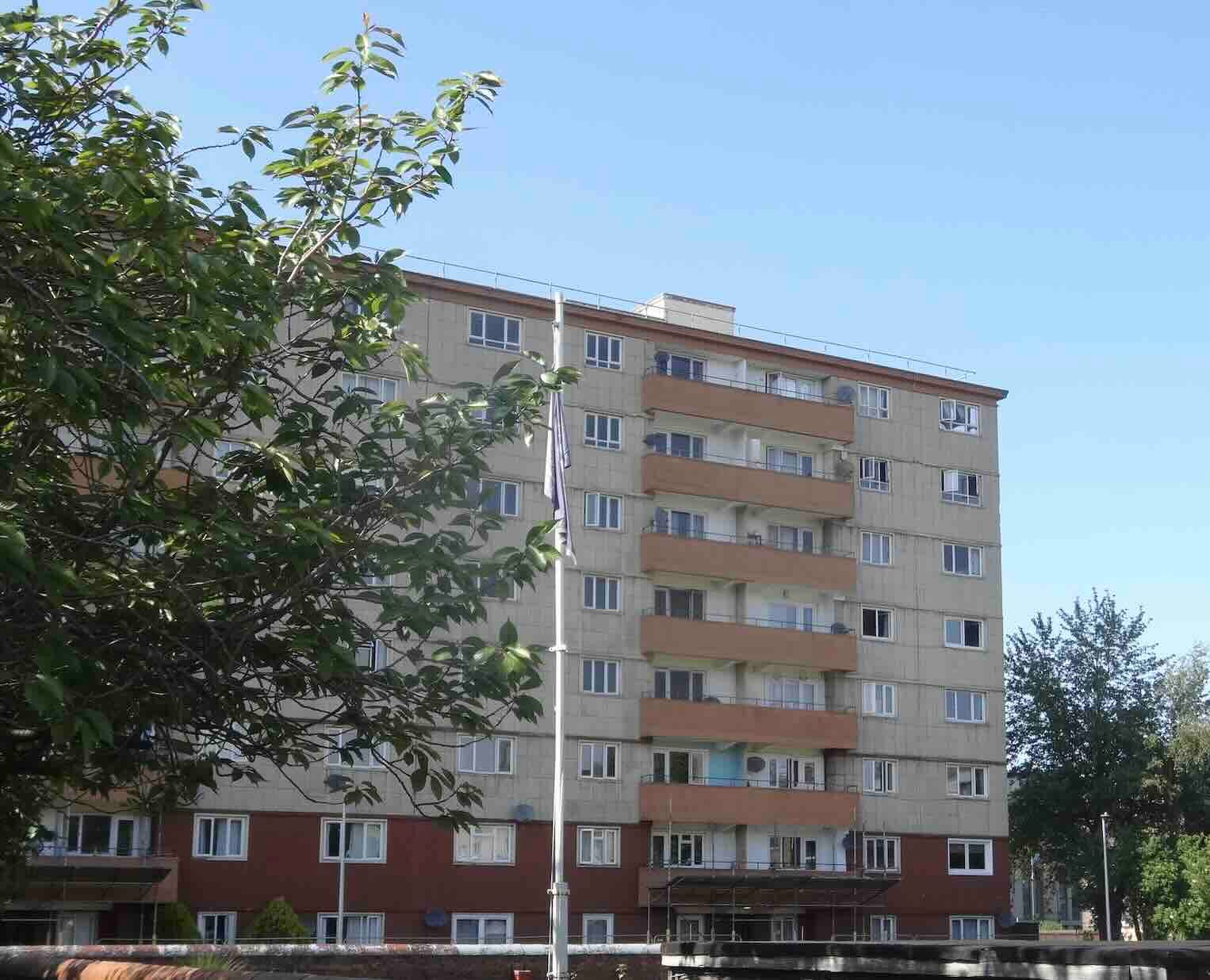
We cannot afford to lose more properties to demolition (as we are doing with Oxcars Court and Inchmickety Court in Muirhouse and likely Westfield Court in Gorgie) and their embedded carbon.
Tenants are the eyes and ears of buildings at risk of deterioration; giving them a real voice in how the council allocates resources should help ensure that maintenance issues will not go unaddressed long enough to cause irreparable damage, and that repair programmes are carried out in a way that is considerate to their needs.
Another matter is allocation of social housing. As a reminder, the latest figures - being considered on Tuesday by the city council’s Housing, Homelessness and Fair Work committee (here) - show some 6,521 households in temporary accommodation, and more than 30,000 applicants for ‘choice-based’ social housing.
Since April last year, allocations have been suspended for the majority of applicants - to help reduce the number of people in unsuitable temporary accommodation - the subject of a online consultation exercise, here, that ended early last month.
Indeed, the city council’s Housing, Homelessness and Fair Work committee on Tuesday is considering (here) a lifting of the suspension.
Meanwhile, according to a recent Freedom of Information request, some 9,224 of the 30,000-plus households on a ‘council house’ / housing association ‘waiting list’ have been on it for over five years.
Said the city council, in reply to the FoI: “For applications active for more than five years, the number of applicants in this band who have received at least one offer of accommodation that was refused: 1,235.
“The number who have received no offer of accommodation in that period: 6,864.”
While there are many complex circumstances that come into play when an individual makes a decision on whether to accept a property offered, it’s worth considering how people on the waiting list might overall be more proactively engaged, as the city ramps up investment into more housing.
Let’s imagine an alternative system, where prospective tenants on the waiting list are consulted on the required and desirable features of their housing and adjoining amenities.
Choosing tenants from a waiting list at the design stage of the process should be administratively no more burdensome than choosing them at the end of the build stage (the current system).
Given the size of this cohort, it is likely that shared preferences and needs might emerge, either around accessibility requirements, complex needs support or simply what shared space is valued within a property or the overall neighbourhood (e.g. garden and growing spaces, safe play facilities, bicycle or car parking, communal indoor spaces, etc).
Once such groupings are identified, they could engage with the design process for a prospective building or neighbourhood; as individual households, while laying the ground for building shared community.
Social Enterprises like Imagine If have produced interactive design workshops to facilitate discussions about how residents might choose to allocate communal space for amenities, which can be used to cement a shared vision (or reveal differences of opinion).
While it’s a process that might not work all the time, it might go some way towards reducing the number of offers that are turned down, plus lead to higher-quality designs that feel right for the residents.
Tenant participations alone will not solve our housing crisis. But it has to be a core component of how the council engages current and future residents, if we want other measures to be effective and long-lasting.
I am standing to be a councillor - for the Portobello / Craigmillar ward - because I believe that the city needs to do much more to engage its residents, in a way that goes beyond performative consultation exercises.
As someone who has spent years living in housing co-operatives, I have first-hand experience of how tenants, taking ownership of their own building, can change lives.
It’s a tenure type that, when run sensitively, can be well suited for people with complex needs and also quickly adapt to tenants’ and buildings’ changing circumstances.
BuildEdinburgh.com has tirelessly been cataloguing the many benefits of neighbourhood co-design. So much of it makes absolute sense, and it should already have been embraced.
If I am elected on the third of September, I will make sure that this kind of genuine tenant participation is back on the agenda.
Lorenzo Martinico is the Scottish Green Party candidate for the Portobello / Craigmillar council by-election on September 3.
Image details: Westfield Court, Gorgie; copyright Mike Wilson