

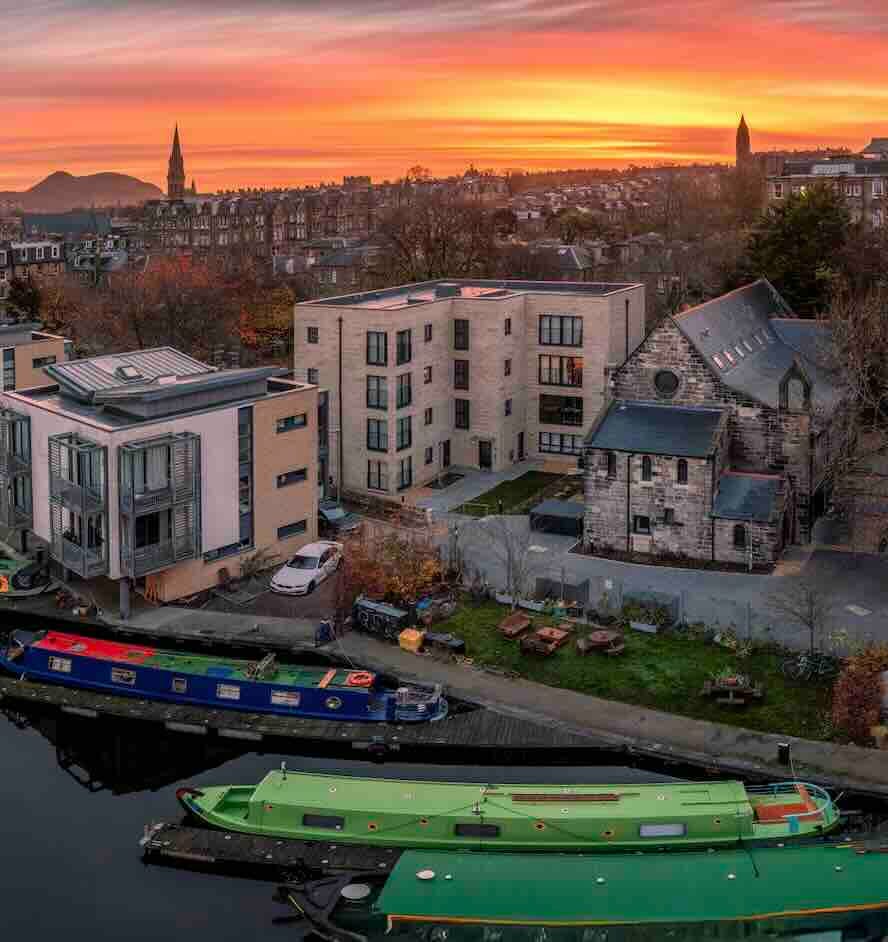
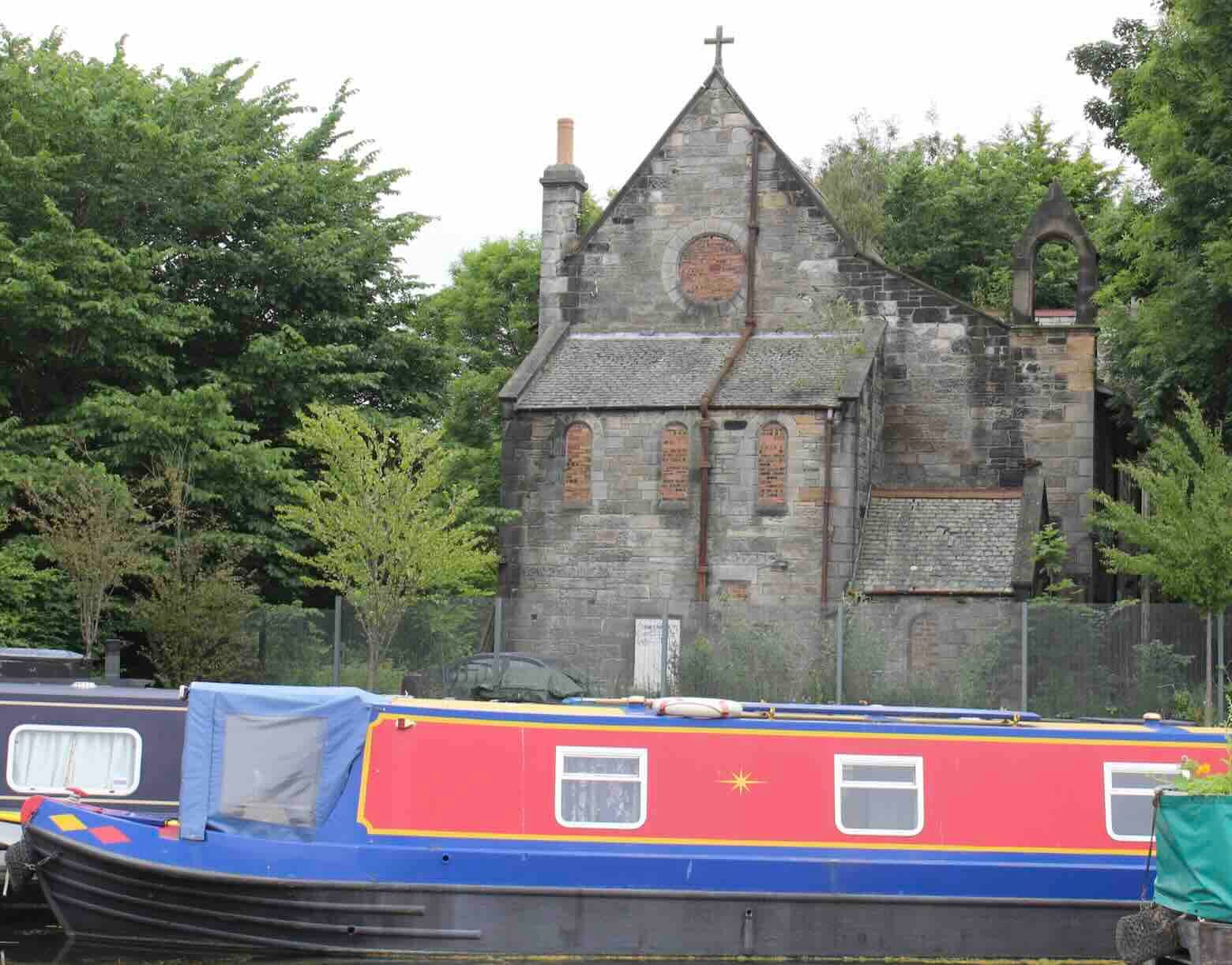
UNTIL recently, a walk down the Union canal towards Fountainbridge could hardly avoid the sight of an abandoned and derelict church located on the southern side of the canal, tucked behind the tenements of Viewforth.
But the building - once an eyesore - has been painstakingly refurbished and restored so that since 2024 it has been home to four families who might otherwise struggle to find suitable housing in the capital on their incomes.
These households, together with residents in the block of ten new-build flats in what was once the church car park, are now paying a ‘mid-market rent’ (MMR), making the sort of difference to people’s lives that prompted one of the families to describe taking up a tenancy with us - at Lar Housing Trust - as “life-saving”.
Typical monthly rents for a two-bed property in the area stand at around £1,500 compared to Lar’s £860.
Refurbishing properties is become something of a thing for Lar, a not-for-profit housing charity.
We are currently in the process of refurbishing the historic former naval barracks at Port Edgar and have planning consent in place to redevelop the former car factory at Madelvic in the Granton area of the city.
Both sites have long been abandoned and have been in a state of considerable disrepair. Similar completed projects include the transformation of an empty former office block at Westwood House on Gorgie Road into 49 flats, as well as two developments for the Edinburgh Health and Social Care Partnership for people under their care with specialist housing needs.
Saving old and derelict buildings also helps people put down roots in their own communities, breathing life into overlooked areas and vastly improving local amenities.
But what makes the Union Canal church and Lar’s overall development work an example for others to potentially replicate is how it was funded.
The idea for Lar was formed by the housing team at Scottish Futures Trust (SFT), of which I was part before joining Lar, and involved a pathfinding finance model of loan-funding rather than grants.
At Lar’s launch ten years ago, the aim was simply to prove the concept of an alternative funding model could work.
Credit to the team at SFT for the vision to try something different and the Scottish Government civil servants and ministers for their bold approach to adopt this, despite the idea being untested and unconventional.
Loan funding is, of course, repaid, unlike grants, which means it returns to the public purse and can be re-used to finance further development. The net cost, therefore, of a Lar home is also considerably cheaper than its grant-funded equivalent.
There are too few developers in the housing sector in Scotland with the means or the risk appetite to tackle such complex regeneration projects, but one of our strategic goals is to help save Scotland’s built heritage - because of the certainty our funding model offers, we have been able and willing to take on those risks.
Tackling derelict and often listed buildings takes time, requires a flexible approach and time to react to unexpected situations.
We have enjoyed the benefit of cheap government debt of £55 million at our launch blended with commercial finance of £65 million later secured from Scottish Widows/Bank of Scotland.
The government loan has provided the necessary conditions to take on these projects without raking up finance costs and, consequently, rents.
The upshot of this funding model also makes refurbishment an alternative option to new-build, with the added benefit of saving our tenants an average £3,616 a year in rent.
We have been able to achieve this for our tenants because of our forward funded model and the financial certainty this allows. There is a growing demographic of people who neither qualify for social housing nor can afford private rents. Lar’s model addresses their needs.
If this sounds potentially too good to be true, the reality is that our tenants have collectively saved over £10 million in rent against market rates, on top of which they have a home for life should they want it. Lar does not operate a short-term model for tenants and our homes will remain within the charity sector in perpetuity. Our model should provide a blueprint for repurposing derelict and empty buildings for Scotland’s housing sector.
Mikko Ramstedt is chief executive of Lar Housing Trust
Main image details: copyright Lar Housing Trust; the old Viewforth church, copyright Mike Wilson
Great work and shows what can be achieved when you get all the right players pulling in the same direction. More power to your collective elbows.
What a heartening article. As a near neighbour of that church on the canal here's wishing that Lars could take on the huge gapsite right across from the church. The council had grand plans as I recall, but nothing has happened for some years. An update from someone, somewhere, would be much appreciated.