

IMAGINE, if you will, a small, northern European city – a capital – which has a thriving economy and is sufficiently interesting to host an ever-growing tourist industry.
It’s small enough to get about on foot. However, if you want to, you can use the metro, tram, buses and even ferries with a single ticket. Bikes are not just tolerated but encouraged – there are 150 km of dedicated lanes.
You’ll have guessed by the reference to ‘metro’ that I’m not talking about Edinburgh.
It’s actually the Finnish capital of Helsinki, which has about the same metropolitan area population numbers (1.6m) as the South East Scotland Transport Partnership’s eight-council area of influence.
I could, though, have been talking about another Scandinavian capital, Sweden’s Stockholm, a slightly bigger city region which I’ve also visited, that also has a user-friendly, integrated system of getting from A to B – despite being built on an archipelago.
Comparisons, of course, are invidious. And it’s not going to be all perfect: check out the brilliant Helsinki Complaints Choir (yes, it’s a choir that sings specially-composed songs about various local complaints) which Edinburgh could do worse than copying.
However, I would argue that part of the problem lies in the fact that, unless you’re working in the specialist transportation sector, you’ve probably never heard of the South East Scotland Transport Partnership, or SEStran for short.
And if you think you’ve heard of SEStran at all, you’ve probably got it mixed up with Sustrans, the UK-wide charity now rebranded as Walk Wheel Cycle Trust.
Confused? I hope you won’t be…
There has always been - throughout Scotland’s changing local government history - a tension between big and small. We might like the idea of the village mayor being able to sort things out for people - as we romanticise about France - but some things can only be considered at scale.
The current system of 32 local authorities was introduced 30 years ago, succeeding a previous nine regions (by far and away the biggest being Strathclyde) and 53 districts.
Partly the reason behind that was political: the regions in Scotland and northern England had become big enough and powerful enough to be a thorn in the flesh of the then (Conservative) administration at Westminster; a history lesson more recent governments - at Westminster and Edinburgh - will not have missed.
In November, current Scottish Government First Minister, John Swinney, hinted at what might begin to emerge over the coming years, when he talked about regional economic partnerships - as reported, here, on the Scottish Government website.
Significantly, he commended the Glasgow city region’s partnership approach of existing structures: “… a far better approach than the imposition of so-called Metro Mayors”.
Like Glasgow, Edinburgh is part of a ‘city region deal’ (CRD) - here - which, from 2018, is scheduled to deliver £1.6bn over 15 years, jointly funded by the UK and Scottish governments.
It sees itself as providing investment in a broad remit of ‘innovation, skills, and infrastructure’.
The Edinburgh and South East Scotland City Region Deal covers six council areas: Edinburgh, the Lothians, Fife and the Scottish Borders.
Regional economic and spatial planning bodies and partnerships run on similar boundaries: health boards don’t, as they operate on the old regional council lines.
My interest in all of this has been mainly transport - having worked until I retired at the end of last month, this year as a consultant to SEStran.
SEStran’s boundaries are wider than the City Region Deal, also taking in Falkirk and Clackmannanshire.
That slight disconnect between the various organisations tells you something, as to whether Edinburgh is being thought about as an emerging metropolis.
Included in the package of CRD funding is the long-awaited work to improve matters on the city bypass.
So, there is the CRD and then there is also SEStran - which is the regional transport body, created by statute in 2005.
The two haven’t always co-operated well together, although recent joint working on how to deliver SEStran’s (statutory) Regional Transport Strategy is encouraging.
Clearly, transport is only one part of the jigsaw. We shouldn’t, for instance, have a commitment to higher density housing in Edinburgh while allowing car-dependent low-rise housing to be built in the Lothians.
The best of housing design that we are beginning to see in Edinburgh should be championed elsewhere in the region.
There should also be a co-ordinated approach to tourism, if only to ease the pressure on the centre of Edinburgh.
You can’t plan for the future if you don’t have the data, and ‘Edinburgh by Numbers’ is exactly the sort of document that’s needed.
It’s an annual publication and the most recent - the 19th edition (here) - was published just a few weeks ago.
Interrogating the data, and using it to create a clear plan for a mass transit system that delivers for the region, could make a crucial difference as the south-east Scotland economy continues to heat up.
Imagine the hothouse atmosphere were all these strategic debates to be taking place under the one roof. Perhaps the creation of a single, regional mayor is not going to happen, for the political reasons I’ve outlined; however, leadership is key to this.
This was a lesson I took from some research I did for SEStran a few months ago on the English city regions and how they delivered transport.
An officer I spoke to at Transport for Manchester said that Greater Manchester as a unit of local government had been 20 years in the making, and that strong leadership at political and official level had been crucial to it.
‘Manchesterism’ will of course have its supporters and detractors, and I can’t imagine our current First Minister being an uncritical fan.
However, in Glasgow, a model is emerging. Glasgow City Region and SPT (SEStran’s equivalent in the west, albeit with greater functionality) have now been entrusted to jointly deliver the Clyde Metro project.
In our own region, SEStran has been tasked with looking into the feasibility of mass transit in the region (currently, the project is called SEStransit).
Imagine, then. Imagine, if you will, a small, northern European city – a capital – which has a thriving economy, and is sufficiently interesting to host an ever-growing tourist industry. It’s small enough to get about on foot.
It’s a city where employment, health, and housing sites are planned and delivered in a way that allows people to move around the metropolitan region with ease and at a reasonable cost.
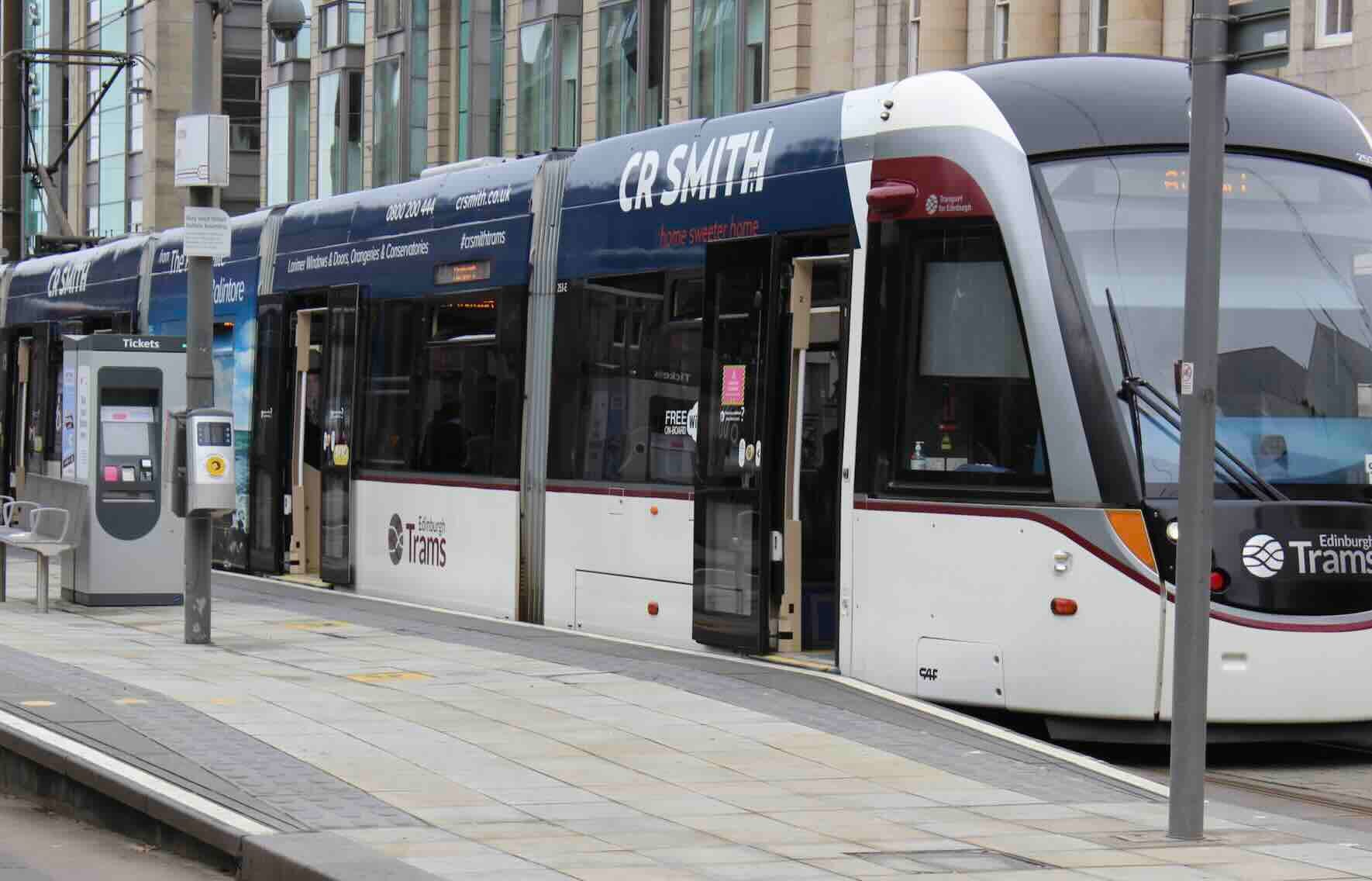
It’s also a city comprising a series of tram lines that go far beyond the city’s inner core, and connects with tram trains in its southern suburbs.
A city where freight delivery, from its ports along the river estuary, happens seamlessly and easily.
Where there’s even a ferry across the river to carry workers into the city from the northern part of the metropolitan area. Where buses and trains are integrated.
And where one ticket does everything.
Imagine it’s called Edinburgh.
Andrew Ferguson is a former lawyer and now a musician and writer.
Image details: copyright Mike Wilson