

DEEP beneath Scotland’s former mining communities lies a buried resource capable of heating homes and supporting local jobs once again.
It comes from the same underground workings that once powered industry, shaped towns and villages, and defined local economies for generations.
But this is not coal.
When the mines closed and the water pumps turned off, groundwater flooded the tunnels and workings below ground, absorbing heat from the surrounding rock.
That stored heat, continually replenished by the Earth’s natural geothermal properties, can now be recovered to provide renewable, sustainable and low-carbon heating.
This resource is known as minewater geothermal (MWG), and you may begin to hear a lot more about it considering an estimated 25 per cent of the UK’s buildings are above a mine.
That’s about nine million buildings.
Mining in Scotland stretches back more than 800 years, with coal being extracted as early as the 12th and 13th centuries.
During the Industrial Revolution, demand for this ‘black gold’ surged and mines spread rapidly across Scotland’s ‘Midland Valley’, including in and around Edinburgh.
At its peak, after the Second World War and nationalisation in 1947, Scotland had hundreds of mines, over 400, extracting primarily coal, along with shale, iron and other minerals.
When the mines began to close in the second half of the 20th century, the impact was profound, not least among the communities that grew up around them.
Water has always been a challenge in mines, many of which lie below the water table, where tunnels naturally fill with groundwater.
The first steam engine, developed in 1712, was created to address this problem by pumping water out of the mines, allowing miners to reach greater depths.
Scottish engineer, James Watt, famously refined the design in the 1760s, vastly improving its efficiency and helping to kickstart the Industrial Revolution.
Ever since Scotland’s, and the UK’s, mines began closing, the Mining Remediation Authority, previously known as the Coal Authority, and taxpayers have had to manage their damaging aftermath at a significant cost. Water filling the abandoned workings mixes with minerals and contaminants from the mine and surrounding rock, often polluting local streams, rivers and the surrounding countryside.
The Mining Remediation Authority, is believed to treat over 122 billion litres of minewater each year at more than 80 sites across the UK, including 12 in Scotland.
Sites like Junkies Adit (an Adit being a man-made tunnel) in Dalkeith are especially well placed to transform these long-standing financial liabilities into valuable community assets.
When the mines closed and pumping stopped, the tunnels and workings slowly filled with groundwater.
Underground, this water absorbs heat from the surrounding rock and settles at a steady temperature around 10 °C to 20 °C all year round, warmer than winter air and cooler than summer heat.
That consistency is what makes minewater such a reliable source of renewable energy.
To extract this consistent heat resource, heat pumps are used. But what actually are heat pumps? Engineering marvel? Witchcraft? Or a lot of hot air? I’ll try my best to explain, simply.
Inside a heat pump is a sealed loop containing a specific fluid that boils at a much lower temperature than water.
Heat from the minewater makes this fluid turn into a gas, which concentrates the warmth and passes it into a separate water system to heat radiators and provide hot water.
It works like a fridge in reverse: instead of moving heat out, it moves heat in.
Heat pumps are highly efficient, producing around three units of heat for every one unit of electricity, and a consistent source like minewater at 10–20 °C year-round is far more reliable than air (for an air-source heat pump) in the middle of a Scottish winter.
One or more heat pumps are just one part of a loop system, where warm minewater is brought to the surface, its heat then extracted to warm buildings, with the resulting cooled water returned underground to recharge, ready to be used again. This creates a renewable and sustainable heating system.
From Blindwells (in East Lothian) to Brazil, from Clackmannanshire to Czechia and from Newtongrange to the Netherlands, wherever there is mining, past or present, there is the potential to use minewater geothermal for the heating and even cooling of buildings depending on the climate and season.
The Romans famously engineered luxury geothermal bath houses for pleasure over three millennia ago, but you don’t have to go as far back to find the first example of a successful MWG project.
Early examples can be found in Canada and Germany back in the 1980s but it is in Heerlen, Netherlands, where the idea was put to test on a commercial scale in 2008.
It was the subject of a fact-finding tour, reported by the Scottish Government in 2016 - here.
Since the launch of the Heerlan scheme in 2008, it has been a huge success.
Carbon emissions for heating and cooling in Heerlen have dropped by an estimated 65 per cent, and the system continues to be expanded with a target 120,000 homes to be fed by it by 2040.
Data centres and other industries are encouraged to relocate to Heerlen to vent their waste heat down into the mine workings to further enhance the system. Which they have done. Driving economic and climate success in Heerlen.
Closer to home, there is enormous potential.
In Cornwall, Yorkshire, Wales and in Scotland there are viable proposals to make to turn these liabilities into assets.
But it is Gateshead (here, on the UK Government website) which is the trailblazer in the UK. Since 2018 - as reported here, again on the UK Government website - it has supplied 350 homes, education and office buildings with below-average prices for sustainable heating, with ambitious plans to heat another 5,000 homes.
However, it can not be understated that these can be difficult schemes to implement.
As a report - from the British Geological Survey to an UK parliamentary committee (here) - notes: “In Wales, a test scheme in Bridgend explored the feasibility of using mine water for heating.
“The scheme was initiated in 2016 with the aim of harnessing geothermal energy from the flooded former Caerau Colliery to provide heating for approximately 300 homes, as well as community buildings and a primary school.
“However, development was discontinued due to significant technical and commercial uncertainties encountered during the design and development phase - this project highlights some of the complexities and challenges of implementing mine water heating schemes in the UK.”
It can be like trying to hit the bullseye blindfolded, drilling - at considerable expense - boreholes into the ground, not to mention potential issues with inconsistent flows and the build up of oxidised iron ore.
Mine plans were drawn up decades, and even centuries, ago, long before GPS.
But, that said, there is real potential to deliver cheaper sustainable heating (and / or cooling) and create good jobs.
Corey Boyle is a graduate civil engineer at Sweco, specialising in ‘active travel’. Last year, he was awarded (here) the Princess Royal Award for Emerging Engineers - by the Institution of Civil Engineers - for his contribution to the South Sub Tram-Train student group project at Heriot-Watt University.
This is an edited version of an article that first appeared - here - on the website, Edinburgh Inquirer, for which grateful thanks.
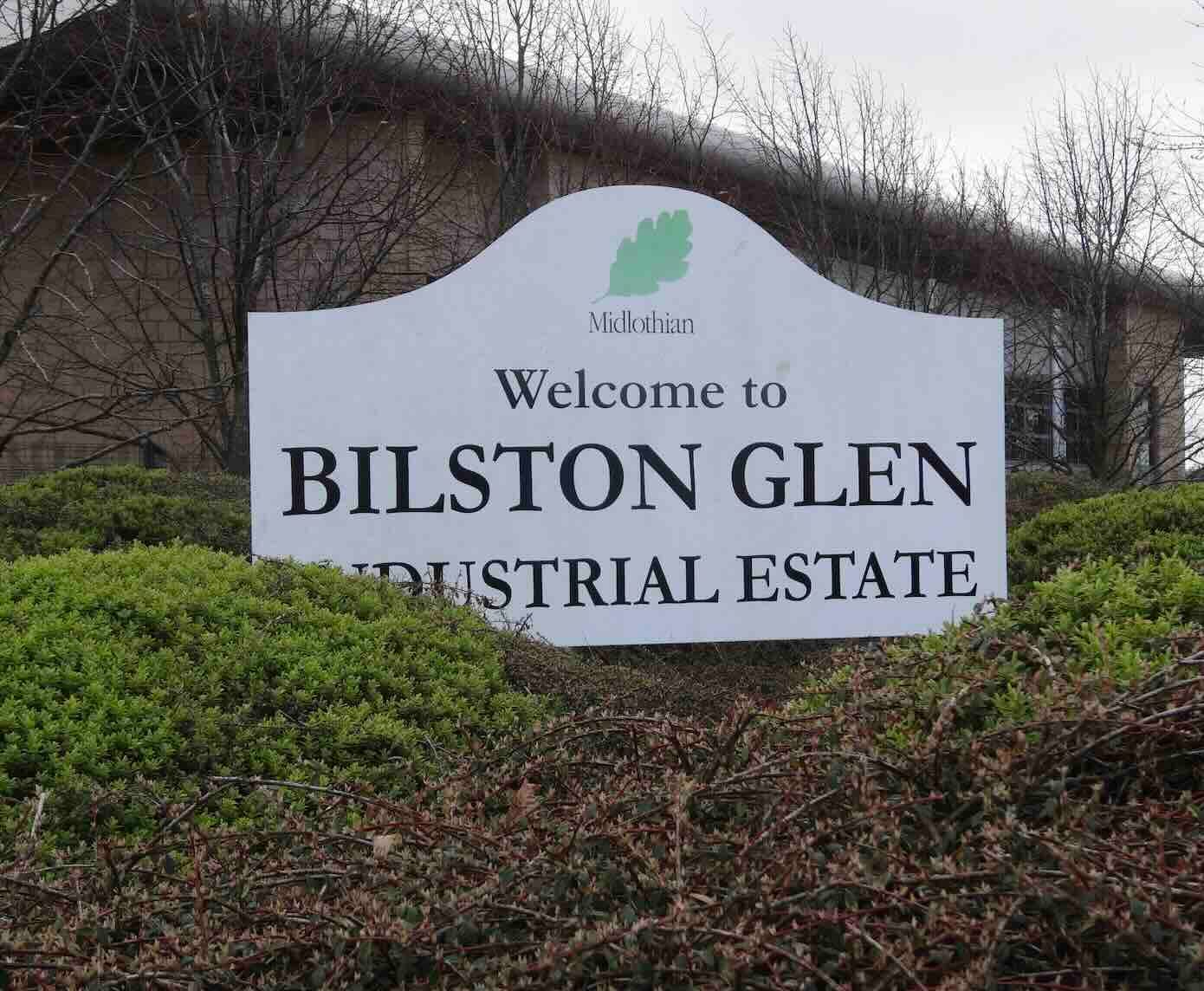
Image details: Now an industrial estate, previously Bilston Glen Colliery; copyright Mike Wilson