

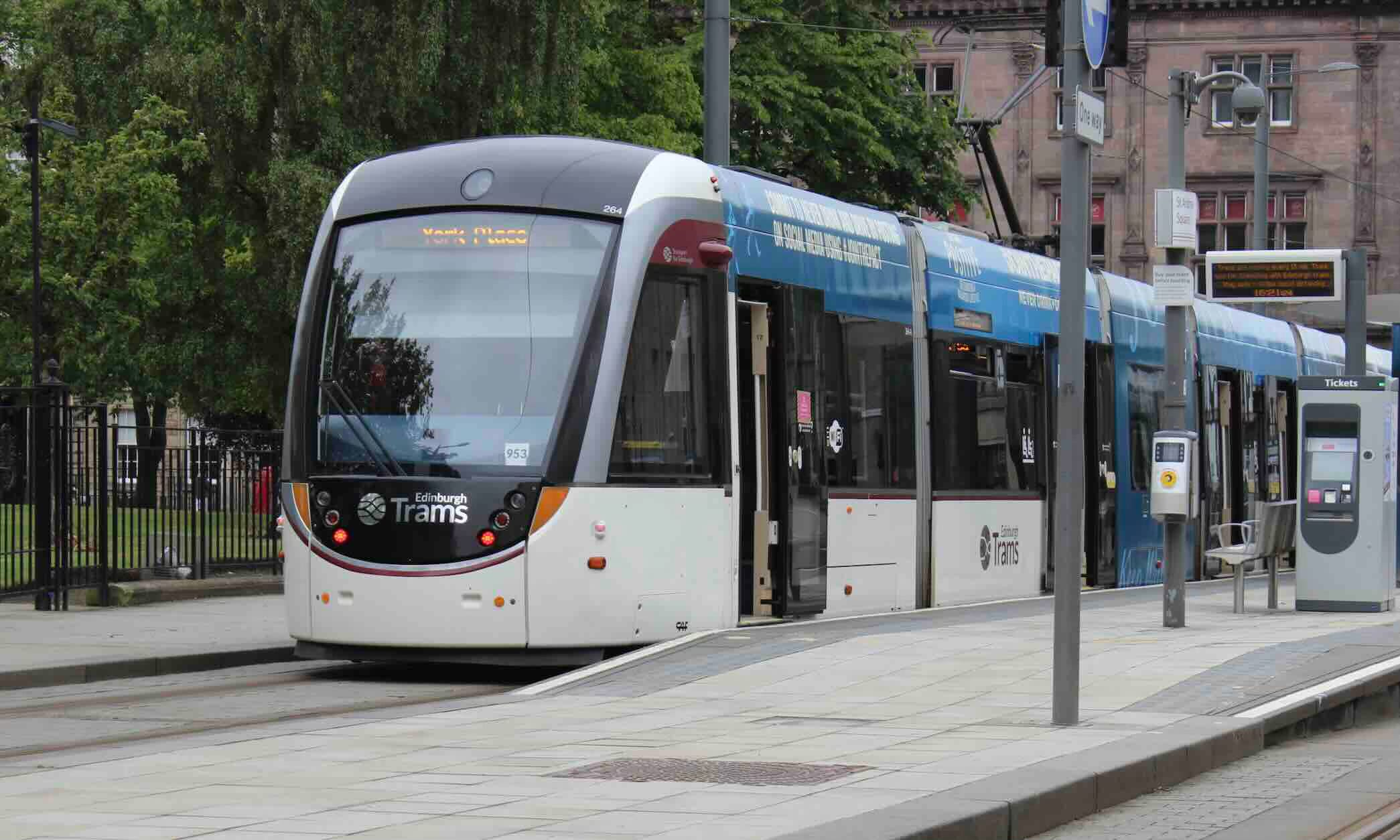
This might be an article about France versus the UK, but there are comparisons, surely, between France and Edinburgh potentially worth reflecting on…
FRANCE has built around 300,000 new homes per year in recent years - roughly the same number that successive UK Governments have set as a target but never achieved.
One significant enabler has been the systematic expansion of tramway networks, with new lines opened across French towns and cities over the past two decades, many explicitly designed to enable suburban housing growth.
To examine whether a similar tram-enabled housing model could be replicated in the UK, we took five senior UK policymakers - with direct responsibility for housing, transport and planning [no names, no pack drill] - to visit three French locations where tramways have been used to unlock development: the Panorama district in Clamart (south-west Paris), the long-term transformation of Le Plessis-Robinson (also south-west Paris), and the Capucins development zone in Angers (near Nantes, towards the Atlantic coast of France).
Participants were interviewed before and after the visit, under Chatham House rules.
The aim was to understand how exposure to real places shaped their view of what might be possible in the UK and what barriers would need to be overcome.
Across all three sites, a number of common characteristics were evident.
First, tramways were not treated as add-ons to existing suburban layouts. They were either integrated into, or used to shape, new districts built at ‘gentle density’: medium-density housing capable of supporting high-quality public transport, local services and a strong public realm.
Second, the management of road space differed markedly from typical UK suburban development. Surface parking was minimised or eliminated.
Streets were narrowed and designed as places rather than traffic corridors.
Underground or communal parking was used to reclaim land for additional housing, which in turn helped fund redevelopment.
None of the schemes sought to eliminate car ownership, but all sought to reduce car use by ensuring that daily needs could be met locally and that tram services were frequent and reliable.
Third, tram and housing delivery were not tightly interdependent. Tramways were delivered as part of regional programmes funded through hypothecated transport taxation, while local authorities simultaneously shaped land use, design codes and public realm.
The two systems progressed in parallel, rather than requiring each tram project to be individually justified as enabling a specific housing scheme.
This reduced complexity.
Underlying these physical outcomes was local leadership of powerful Mayors. In all three locations, long-serving Mayors had articulated a clear spatial vision and pursued it over many years.
Policymakers were struck not only by formal powers, but by the clarity of intent.
Before the visit, participants were cautiously optimistic about tram-enabled development but concerned that UK’s more centralised fiscal system and fragmented land assembly would make replication difficult.
After the visit, there was greater clarity about the structural ingredients that appeared to underpin French success:
Dedicated and hypothecated transport funding;
The decoupling of transport investment from specific housing schemes;
Strong local powers over land, roads and design;
Standardised and lower-cost tram delivery; and
The deliberate design of road space to favour non-car travel and avoid on-street parking provision.
There was no suggestion that the French model could simply be transplanted to the UK. The two countries have different institutional histories and political cultures.
However, the visit led to increased confidence among participants that, with sufficient devolution of powers and funding, and with sustained political leadership, similar exemplar schemes could be delivered in the UK within the next decade.
This article is the executive summary (slightly tweaked) from a report recently published by the think tank and urban design consultancy, Create Streets, here - for which grateful thanks.
Image details: copyright Mike Wilson