

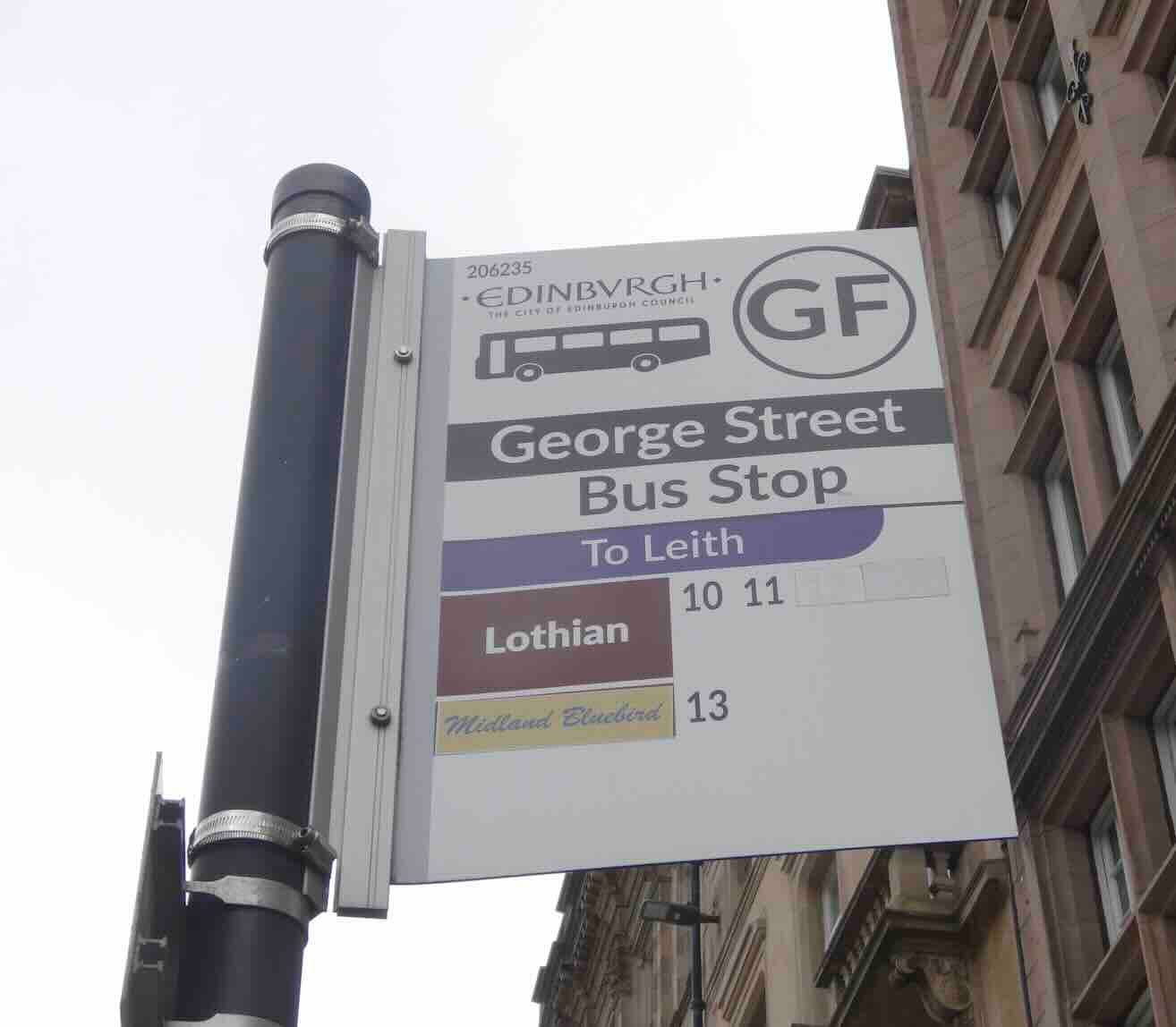
THE No.13 is one of Edinburgh’s stranger bus routes.
Small, subsidised and run by Midland Bluebird rather than Lothian, it threads its way through corners of the city that most services simply bypass.
A route plan doesn’t do it justice either: it snakes through quieter streets of the New Town - Drumsheugh Gardens and Drummond Place among them - that rarely see a bus at all.
Near the eastern end of the route is Lochend, not a locale that tourists often find their way to.
The park and its loch are well worth the trip, and the area around Meadowbank is changing fast.
Along the way, the little bus passes through brownfield sites that, having been neglected for decades, are now busy with building activity, giving a good picture of a city in the middle of reinventing itself.
While its eastern reaches offer a glimpse into post-industrial repurposing, the western arm is a journey into the city at its greenest and most exclusive, an exercise in ‘rus in urb’, where privilege is measured in acres of quiet, leafy isolation.
Climbing aboard on Hanover Street, we quickly escape the bustle of Princes Street, the small Bluebird 13 weaving almost apologetically between its much larger Lothian cousins.
It clambers down Queensferry Street, narrowly avoiding the visitors heading to Dean Village. Freed from traffic, it then scuttles down Drumsheugh Gardens. A few stops later, after passing the Gallery of Modern Art (it cuts between Modern One and Two), the journey takes a distinct turn.
The bus begins its slow saunter up Ravelston Dykes Road, along the fringes of Murrayfield. It’s here you appreciate the strange sense of access provided by public transport.
For a moment, you are a passenger cutting directly between a major private school (Mary Erskine’s) and two golf courses (Murrayfield and the Ravelston nine-holer), glimpsing through the trees and over the fences.
We pass the dense Ravelston Woods, a genuinely wild-feeling spot that shows how, in just a few stops, the 13 can take you from the tourist trickle towards Dean Village into a dark, sylvan maze.
This part of Edinburgh is resolutely, sometimes startlingly, residential.
Peaceful, yes, but often verging on lifeless: a long, slow trundle through streets where even a smidgen of commercial enterprise comes as a surprise.
After passing along the base of Corstorphine Hill on Craigcrook Road, the bus drifts into a maze of bungalowed back roads. When it finally disgorges onto the waves of traffic on Queensferry Road, the countryside trundle is over.
The 13’s terminus is perhaps the most pointed destination of the entire journey: Craigleith Retail Park.
Around the back of the enormous Sainsbury’s, you can see bare sandstone, the scar of the massive quarry from which much of the New Town was built, including the Greek Revival Old Royal High School.
Now, history is overlaid with a starkly different vision. Craigleith is utilitarian, basic, and utterly divorced from its surroundings. It is a monument to the car-centric, Americanised UK retail experience, a functional bunker within easy reach of affluent, virtually shop-less residential areas.
The retail park raises a question facing modern Edinburgh: what kind of city do we want?
The European model of good public transport and density, or this car-driven, sprawl-friendly design? The latter feels like a failed 1960s vision we’ve somehow kept faith with, a physical embodiment of the UK’s awkward position between two continents.
Yet even Craigleith has a silver lining. It’s one great plus is its position as a nodal point on the old railway path network. From here, you have easy active travel access to Granton, Leith and, through the Roseburn Path, south to Fountainbridge (via the new link at Russell Road / Dalry) and Haymarket.
The 13 bus itself is a key to this network, giving access to the Water of Leith walkway and other green corridors, including at its western tip the Restalrig Railway Path.
This tension is precisely what fuels the stooshie surrounding proposals to run a new tram leg down that very Roseburn Path, pitting the residential preference for untouched green space against the need for high-capacity, climate-conscious public transport. But that is a topic for another time.
The ‘Broughton Spurtle’ newsletter reports that there are once again concerns about the survival of the No. 13, with the question of renewing the city council subsidy due to be discussed in July. It would be a shame to lose it.
The 13 doesn’t just offer a scenic route. It actively connects travellers with otherwise hard-to-access corners of the city. Moving from the Georgian streets of the New Town to the repurposed industrial sites near McDonald Road, and landing squarely in the functionalism of Craigleith, the bus traces Edinburgh’s evolving identity: old brownfield sites finding new life, the suburban sprawl of the retail park, greener urbanism planned for areas like Seafield.
For years, Edinburgh has struggled to manage congestion while preserving its historic core.
Some argue that limiting car access is ruining the city centre; others that the car-driven model is the very thing hollowing it out. Past decisions, from Tollcross to Potterrow, still shape daily frustration.
The real wealth of Edinburgh isn’t only in its stone buildings or its golf courses, but in the connectivity offered by its public spaces, paths and public transport.
The future of the city rests not in catering to the car, but in investing in the routes, both bus and path, that knit the divided city together.
The No.13 is a good place to start.
Charlie Ellis is an Edinburgh-based researcher, writer and EFL teacher, who covers culture, education and politics.
Image detail: copyright Mike Wilson