

WALK around Edinburgh long enough and you keep running into the same name.
The university library, the Canongate housing, the Scottish Widows building on Dalkeith Road, a church in Clermiston: Sir Basil Spence is all over the city, and most people walk past his buildings without a second glance.
Basil Spence and Partners (later Spence, Glover and Ferguson) occupied offices at 40 Moray Place from 1946 to 1992, with the Spence family residing on the first floor.
Spence shared a long, storied association with Edinburgh, having been educated at George Watson’s and the Edinburgh College of Art, where he was reportedly a star student renowned for his brilliance as a draughtsman.
Beyond Moray Place, he also lived on Jordan Lane in Morningside, in an eccentric property where he left his own distinct imprint.
This included a rather unattractive concrete fireplace, standing in stark contrast to a room otherwise defined by an elegant painted ceiling by the renowned artist, Samuel Bough.
A later owner considered taking a sledgehammer to the fireplace, only pausing when informed that, as a piece of Spence’s work, it was likely listed. It is a fitting anecdote for an architect whose output has frequently courted controversy.
His architectural imprint on Edinburgh is significant and varied, spanning from pre-war Art Deco to bold post-war Brutalism and Modernism.
Rather than imposing a single, rigid style, Spence shifted between movements with notable adaptability, always seeking to match form, light and material to the function of each space.
His earliest Edinburgh commission, the Causewayside Garage of 1933, was built in a striking Art Deco style using glass, steel and concrete, and has since been converted into residential apartments.
By the post-war era, his focus turned to rebuilding and expanding the city’s institutions.
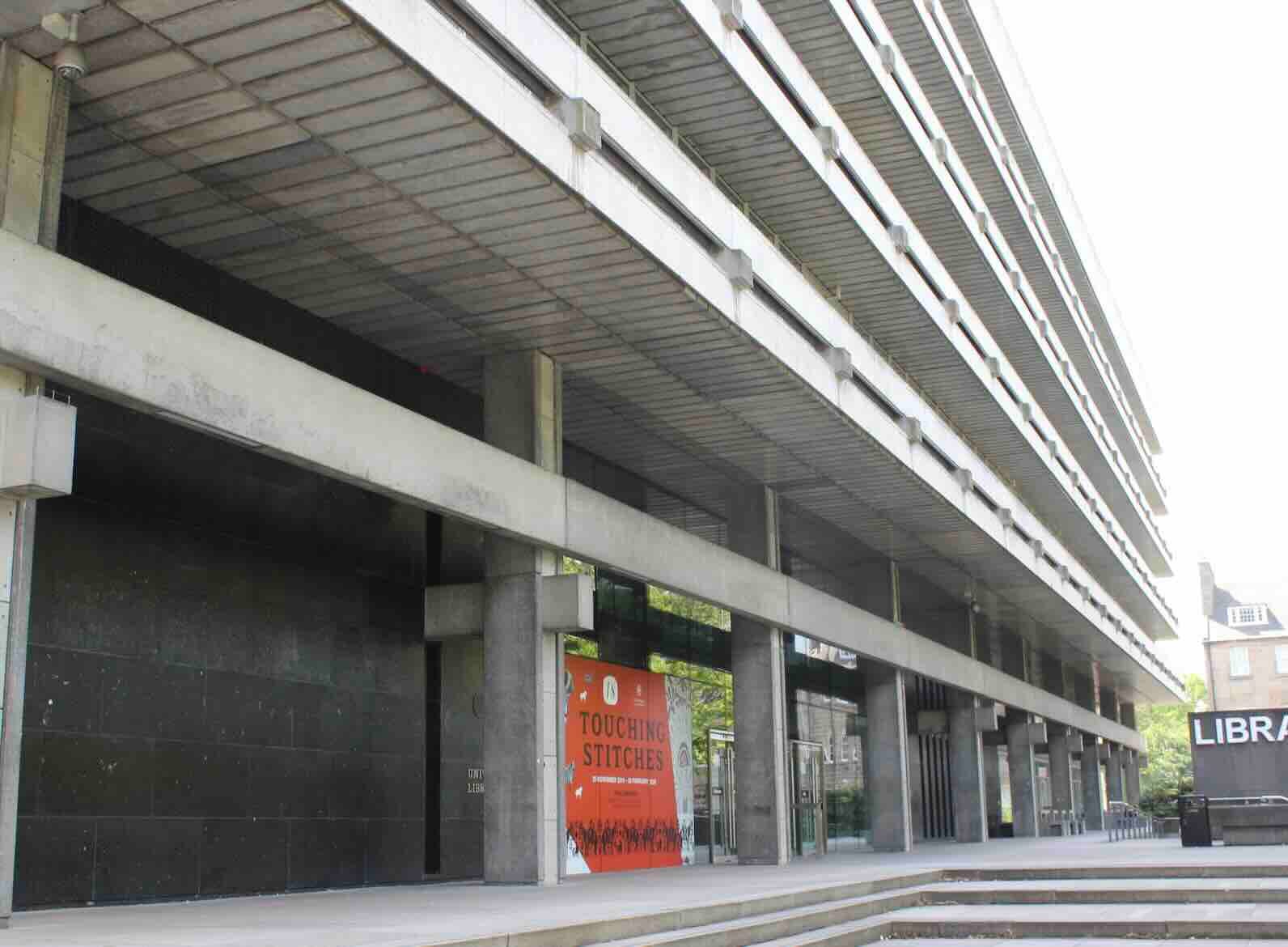
His master planning and design work for the University of Edinburgh produced some of Scotland’s finest modernist buildings, most notably the Grade A-listed Main Library in George Square, celebrated for its innovative concrete and glass exterior, deliberately structured to mimic columns of bookshelves.
At its opening, it was the largest university library in the UK.
His other key university work includes the James Clerk Maxwell Building at the King’s Buildings science campus.
Beyond the university, significant projects include the Canongate Housing Development on the Royal Mile, the Harry Younger Hall, and St Andrew’s Church in Clermiston, his only Church of Scotland design, featuring a minimalist, Scandinavian-inspired white gabled form paired with a detached concrete bell tower.
What sets Spence’s Edinburgh portfolio apart is how his boldest modernist concepts were tailored to respect the city’s historic fabric.
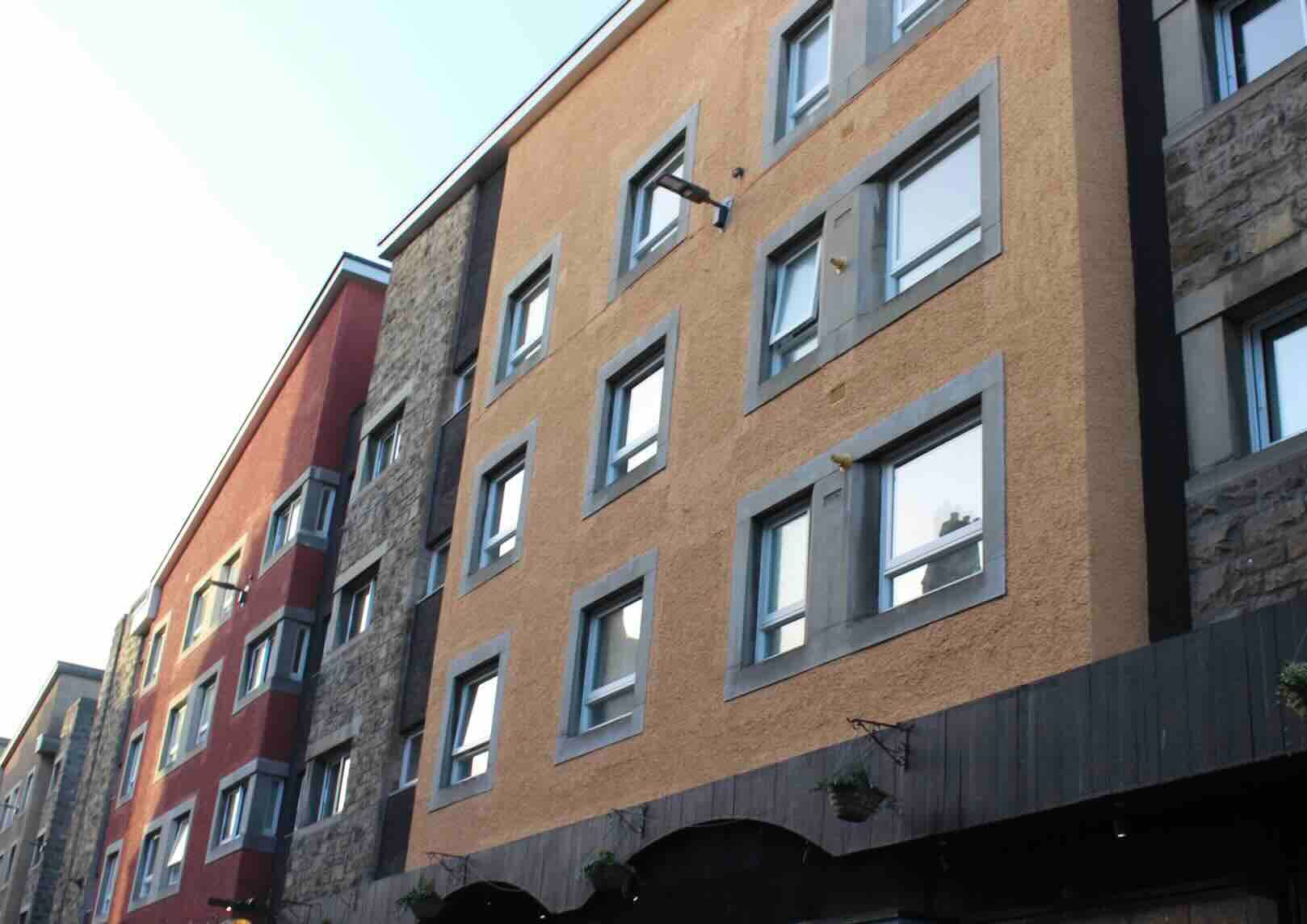
This is well illustrated in the Canongate development, where he introduced modern social housing into the Old Town by blending concrete arches with traditional Scottish vernacular rubble stone.
When given the freedom of open suburban or corporate sites, he leaned into grand-scale modular futurism.
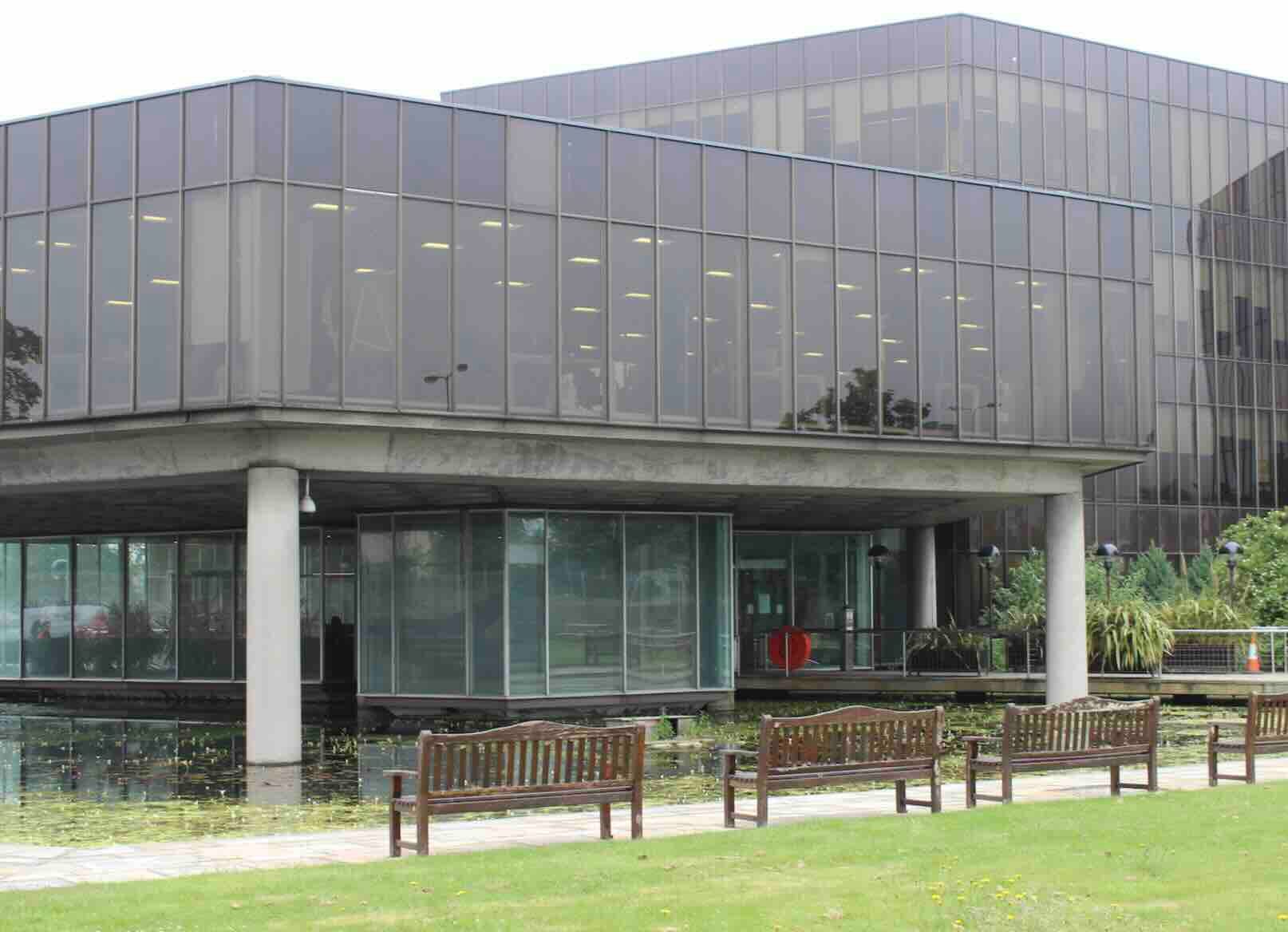
The former Scottish Widows headquarters on Dalkeith Road, with its interlocking hexagonal forms and dark glass facades, is a celebrated icon of post-war Scottish commercial architecture and has been rightly listed.
The way the building echoes the Salisbury Crags behind it is very clear on sunny days, drawing attention towards it and creating a desire to investigate.
Spence was often seen as a moderate advocate of modern architecture, yet he was also at the heart of the backlash against it.
Projects like the Hyde Park Barracks were highly controversial, and his involvement in social housing, particularly the Hutchesontown C development in the Gorbals, Glasgow, was troubled.
The deeper influences behind Spence’s work were the subject of a talk four years ago by John Witcombe, Dean of Coventry Cathedral - which Spence redesigned, following the Second World War - given as part of the Moray Feu Bicentenary.
Close to home, Edinburgh’s Mortonhall Crematorium offers a revealing companion piece.
This serene, Grade A-listed concrete structure shares the same vocabulary as Coventry: the multi-angled vertical fins, the careful manipulation of light, the sense that a building can hold both weight and stillness at once.
Witcombe spoke movingly of how the Cathedral reflects ideas of redemption and hope.
The original 15th-century cathedral in Coventry was destroyed on 14 November 1940, in a raid by the Luftwaffe that almost obliterated the city, an event that gave rise to the term, ‘Coventration’.
After a design by Giles Gilbert Scott was rejected, a subsequent competition gave Spence, who had long harboured the ambition of building a cathedral, his great opportunity.
The building’s legacy highlights the tension between artistic vision and practical reality.
Witcombe admitted that the sheer length of the nave makes it less than ideal for delivering sermons, and the original design suffered from a shortage of toilets.
As Spence himself acknowledged of the inevitable overspend, space is expensive.
The building is, in many ways, a complete work of art, underlined by the integration of major works including Graham Sutherland’s tapestry and Jacob Epstein’s exterior sculpture.
Witcombe’s great conviction is in the power of art to bridge divides and promote reconciliation, a mission central to the Cathedral itself.
Born from conflict, the structure offers a living embodiment of hope and rebirth. The Cathedral now operates a ‘reconciliation ministry’, a legacy that continues this work.
The Cathedral’s reputation, and Spence’s more generally, has been rising in recent years.
Edinburgh architect, Malcolm Fraser, has argued that the best of Spence’s work is of a clarity, simplicity and power that towers over the wilful egotism of today’s arguably more gratuitous post-modern shape making.
The standing of 20th-century modernist and brutalist buildings is undergoing a significant rehabilitation, though many are being demolished just as their qualities are being reconsidered.
The restoration of the University of Edinburgh Library illustrates what sustained investment can achieve, of the kind previously reserved for older eras.
It is easy to dismiss structures like Edinburgh’s Argyle House, on Lady Lawson Street, often despised because of what was demolished to make way for it.
Yet the trajectory of the Barbican Centre, in London, now celebrating its 40th anniversary with a considerably improved reputation, shows that a shift in perception is possible.
We should bring the same imagination and commitment to finding new uses for 20th-century buildings that we readily extend to older ones.
Witcombe’s presentation was a reminder that catastrophe can inspire renewal. It urged those present to revisit Coventry Cathedral and, no less importantly, to look again at the modernist structures around us that we too quickly write off.
Charlie Ellis is an Edinburgh-based researcher, writer and EFL teacher, who covers culture, education and politics.
Main image: Main library, University of Edinburgh; all images: copyright Mike Wilson