

A BUNCH of us from school in Glasgow used to take the train through to Edinburgh to watch rugby internationals at Murrayfield.
The routine was always the same. We’d get off the train at Haymarket and walk to the stadium. Game over, we’d proceed to Princes Street and up the Mound, to Deacon Brodie’s Tavern.
The pies were good and so was the beer. Then down the hill to Waverley for the train home.
I wouldn’t have been surprised to have bumped into Robert Louis Stevenson or Deacon Brodie himself on those evenings, such was the intimate atmosphere of mystery and menace in the wynds and closes of the Old Town.
So I was thinking Murrayfield, home of Scottish rugby, as my favourite building - a structure really, back then open to the elements and no seats, except for the spectators in the West Stand.
Wrap-around cover was fitted in the 1990s when an impressively-engineered web of steel created an all-seat venue, albeit with a reduced capacity of 67,000 spectators; previously, more than 100,000 fans could get in.
Deacon Brodie’s is a favourite as well, but its story is well-known.
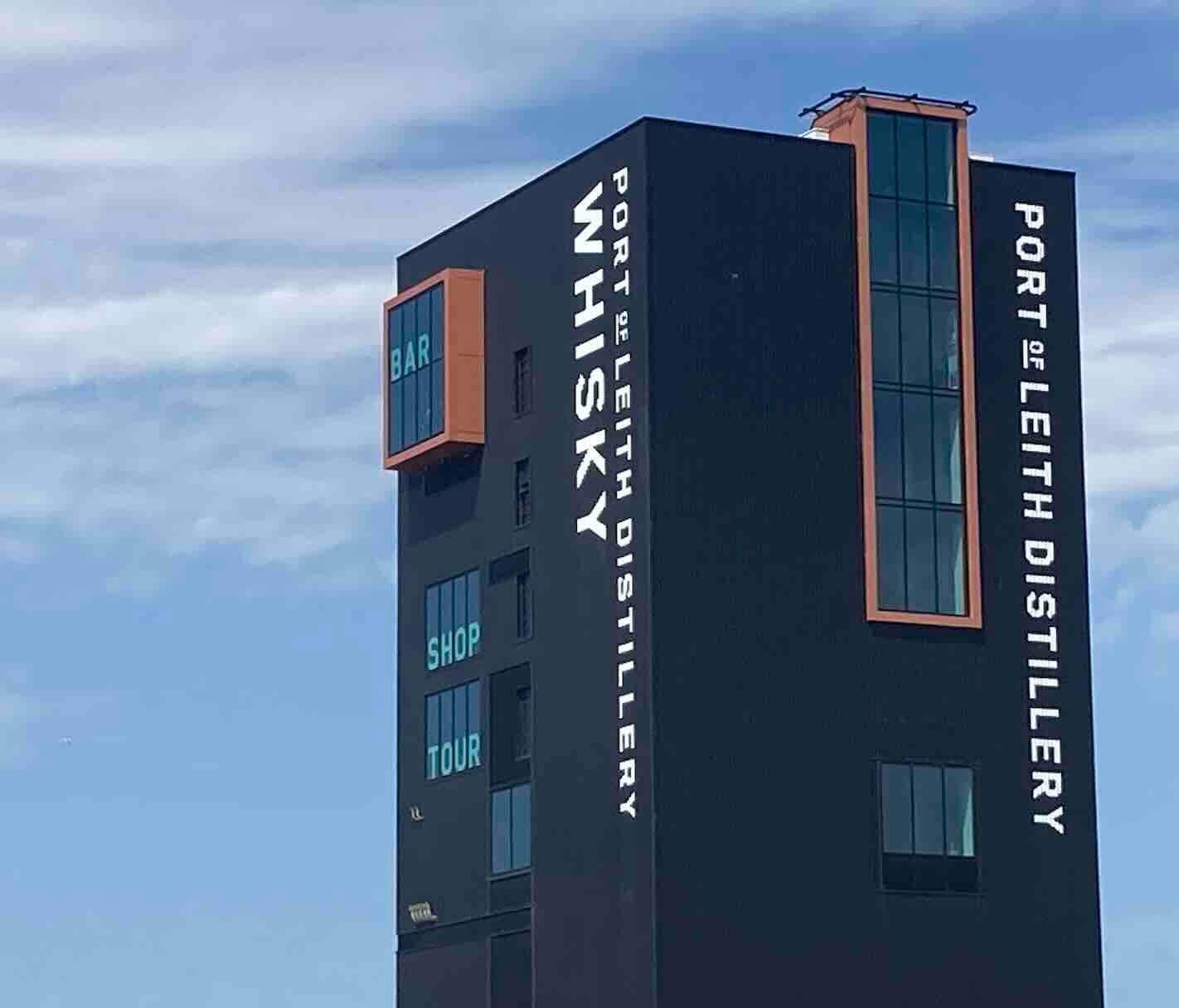
There are many buildings in Edinburgh associated with booze, such as Dynamic Earth, high-tech in the shell of an old brewery. My current choice is the Port of Leith Distillery, designed by Glasgow architects, ThreeSixty, and opened three years ago.
My nephew, partial to ‘a wee dram’, he confessed, was in town for a few days, so I suggested we do a tour.
Easy to book online, ‘tasting experience’ included.
We took the tram from Princes Street to Leith and got off at Ocean Terminal.
Expecting something picturesque, my nephew took one look and gasped, “Is this it?”
We walked on to the distillery. It cannot be described as picturesque but it’s a more refined piece of architecture than Ocean Terminal, the shopping mall built about 2000 on the site of the Henry Robb shipyard.
The distillery is a steel-framed, nine-storey structure that expresses perfectly the modernist dictum, ‘form follows function’.
Basically, it’s a box, but what a box! It was constructed on an almost impossible site, constrained by water and Ocean Terminal. The only way to go was up. It wasn’t conceived to be so, but it evolved to be Scotland’s first vertical distillery and is the tallest distillery in the world.
The tour takes you through the partly gravity-fed production process - grain milling and mashing at the top, descending through fermentation to the hand-crafted copper stills at the bottom.
Every aspect is visible and spotlessly clean. Environmentally-focussed too.
As the guide explained to our group, the barley is locally-sourced and malted, cutting food miles and the carbon footprint. The building includes events spaces, offices, a shop and, of course, a bar.
Whisky is not new in Leith, where bonded warehouses have traditionally stored the ‘water of life’ for maturation, bulk sale and export.
Leith was Scotland’s premier port until Glasgow eclipsed it in the 19th century, but it remains the nation’s largest enclosed deep-water harbour, used by ships that service North Sea oil and gas fields and offshore wind farms.
There is a cruise ship terminal and the Royal Yacht Britannia, now a tourist attraction. Forth Ports secured the right to display the historic ship after it was decommissioned, in 1997.
In the distillery bar on the eighth floor, you can have a wee dram and a bite to eat.
Outside, the marine traffic, the port’s cranes and Britannia look like toys. “Great view,” we agreed and raised our glasses.
“Cheers!”
Robin Ward is an Edinburgh-based architecture critic, writer, graphic designer and a graduate of Glasgow School of Art. The Port of Leith Distillery is featured in his book, The Pocket Guide to Edinburgh’s Best Buildings, published by Birlinn in 2025.
Text copyright: Robin Ward; image copyright: Mike Wilson