

IT’S at times like this when the depth of one’s ignorance becomes all too obvious.
Let me set the scene…
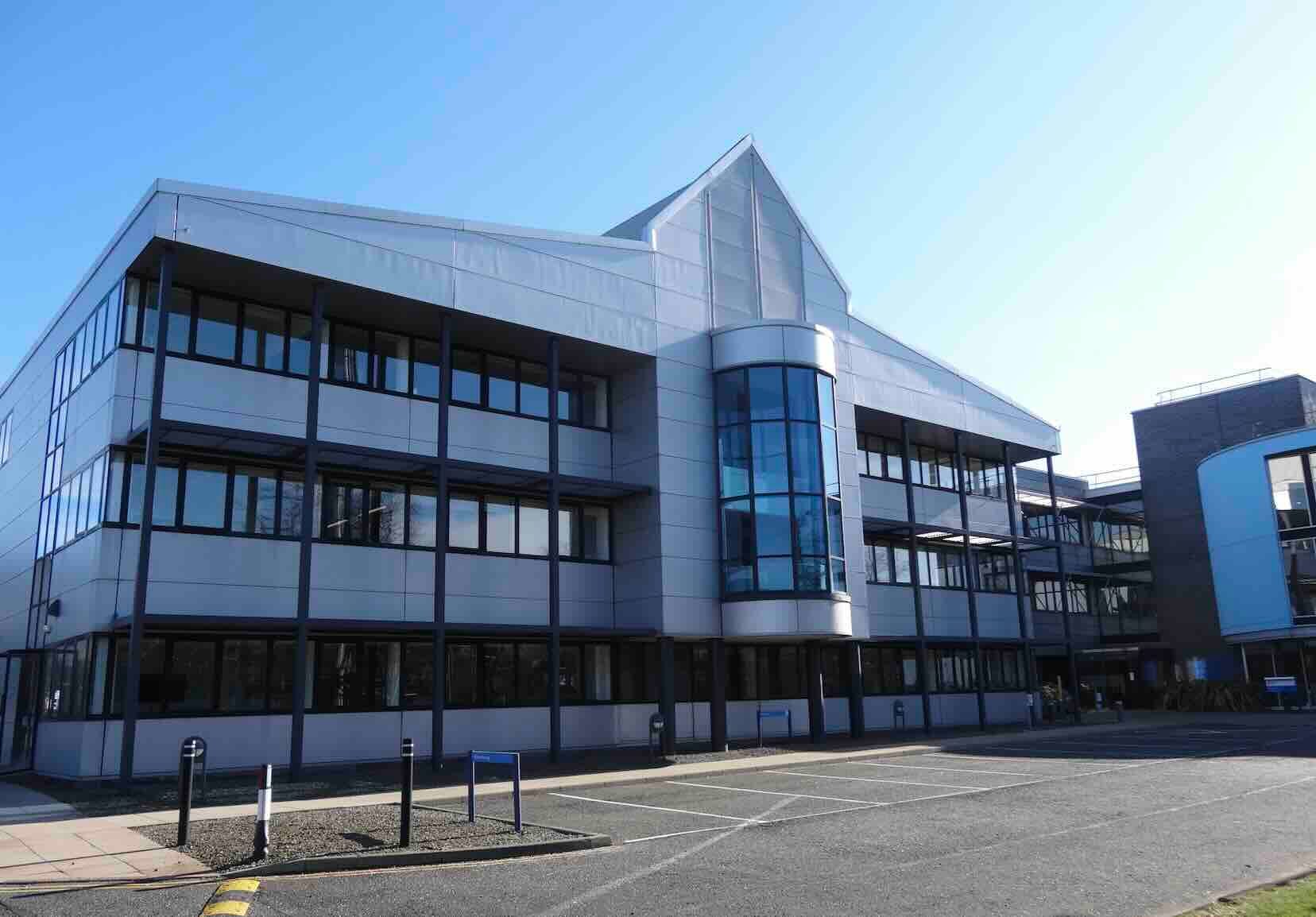
Up near Fairmilehead crossroads, there’s a modern, fairly large and standalone office block, that’s owned by Scottish Water.
For various reasons - not least because of home working by many of its staff - it has been deemed surplus to requirements.
A Proposal of Application Notice (PAN) has been successfully submitted - here (ref: 26/00798/PAN) - with two in-person, public consultation events having already been hosted.
The proposal reads: “Demolition of all existing buildings and the proposed erection of a residential-led (Class 9/Sui-Generis) mixed-used development and other associated works and infrastructure - including car parking, servicing, access arrangements and landscaping.”
The next steps are a planning-in-principle application, and - assuming that is granted - for the site to be put up for sale.
It is just one of several residential development opportunities dotted around the city.
But if any community group was to entertain the idea of developing any of them - along designs agreed in advance by prospective residents - the chances of it coming off are always going to be remote.
Assuming it was even possible to gather a list of local people potentially interested in moving into housing on the Scottish Water site (a gargantuan task in its own right), there are so many skillsets required to translate community aspirations into reality, it can prove just too daunting.
It’s a lucky community group, indeed, that has, among its ranks, any legal, architectural, planning, financial, chartered surveying, residential development, quantity surveying or construction expertise.
Not to mention an intimate knowledge - should the opportunity exist (such as with the Scottish Water building) - of how to potentially take advantage of community empowerment legislation (stretching back to 2015), which could provide a community right-to-buy opportunity, including via a Community Asset Transfer.
The sad reality of trying to knit a patchwork of skillsets together - by contacting individual skills and information providers - can often end up in not even receiving the courtesy of a reply.
The city council is not averse to setting up pilot projects - it did so, relatively recently, in October, with a ‘right-to-grow’ project agreed by the city council’s Culture and Communities committee (here, agenda item 7.1).
The job description for any possible council member of staff - responsible for supporting community-led housing - might well be to look for a generalist (perhaps with an intimate knowledge of community empowerment legislation), who is able to make good links with all the various other necessary specialists.
Alternatively, an organisation might be somehow funded, so that it is able to attract volunteer expertise.
Planning Aid Scotland seems to have somehow ‘cracked that nut’, and it could provide a template as to how to establish a similar, sustainable organisational structure.
Another possible template is Zero Waste Scotland, which is a not-for-profit environmental organisation and a company limited by guarantee that is primarily funded by the Scottish Government.
The truth is community-led housing sounds great in theory. In practice, the challenges can be legion.
This website has published several articles extolling the virtues of resident-designed housing (here).
Among the possible elements of a potential tenemental development: car and bike sharing, recycling and refuse, a residents’ handbook (as in here, on BuildEdinburgh), communal gardening, power tools sharing, gym facilities, ‘later living’ requirements, communal laundry facilities, litter picking, storage space, social and meeting space, repair and maintenance, wildlife havens, acoustic and thermal insulation, elevator access, outdoor games courts, acoustic and thermal insulation, super-secure door entries, outdoor seating and lighting, secure car and bike parking, guest bedrooms, children’s play park, bulk buying of provisions, adjacent properties for extended families (not least for those with caring responsibilities), trees, common insurance, dedicated indoor space for young people, book clubs, crafting space, spring flowers, sanctuary courtyard, solar panels, balconies, ground floor retail, co-working space, treatment rooms and offices, etc, etc.
They represent little more than serving suggestions, with some elements offering the distinct possibility of saving people money.
Because, after all, it would be for the community to decide.
Mike Wilson is editor of BuildEdinburgh
Image details: the Scottish Water offices at Fairmilehead; copyright Mike Wilson