

ALMOST 200,000 households in Scotland had applied (as at the end of March last year, 2024) to social housing providers for housing or to be re-located - according to figures just released.
Says the Scottish Government, here: “177,264 applications were recorded on 26 local authority or common housing register housing lists. This was a 1.2 per cent increase compared with March 2023 (2,172 more households).”
And it adds, by way of a qualification: “It should be noted that people can apply to more than one local authority, and they also can apply for both council and registered social landlords, leading to multiple counting on housing lists.”
Among other findings:
As of March 31 two years ago, there were 2.7 million dwellings estimated in Scotland. Of these, 60 per cent were owner-occupied, 3.7 per cent were vacant or second homes, 13.2 per cent were privately rented or lived in rent-free, and 23 per cent were social rented properties;
New housing supply was 20,364 in 2023-24, a decrease of 3,984 homes (-16.4 per cent) since 2022-23. The majority of new housing supply in 2023-24 was new-build (97.9 per cent), with small proportions of rehabilitations (0.3 per cent) and net conversions (1.8 per cent);
New-build completions decreased by 16.1 per cent from 23,778 in 2022-23 to 19,943 in 2023-24;
Rehabilitations of properties decreased by 50 per cent from 114 in 2022-23 to 57 in 2023-24;
There was a 20 per cent decrease (-92 homes) in net new dwellings created by conversions in 2023-24 (364 homes) compared with 2022-23 (456 homes);
In 2023-24, 6,038 local authority scheme of assistance grants were paid to householders, a five per cent decrease (or 315 fewer grants) than 2022-2023. Scheme of Assistance grants totalled almost £37 million;
The majority of these were for disabled adaptations, 4,194 grants which is nine per cent less than the 2022-23 figure of 4,602. Disabled adaptation grants in 2023-24 totalled £22.2 million which is an increase on the 2022-23 figure of £21.7m;
As of March 31 last year, there were a total of 15,274 houses in multiple occupation licences in force, a decrease of 160 (one per cent) since the previous year;
The total social sector housing stock increased by 6,102, reaching 633,030 dwellings as of March 31 last year, compared with 626,928 dwellings in the previous year. There were 325,477 local authority dwellings and 307,553 housing association dwellings as of March 31 last year;
In March last year, there were 21,085 supported houses for older people and 29,813 supported houses for people with physical disabilities provided by local authorities. There was an increase (1.2 per cent) in supported housing for older people and a decrease (-1.2 per cent) in housing for people with physical disabilities between March 2023 and March 2024;
During 2023-24 there were 25,423 permanent local authority lettings made, an increase of 1,773 lets (7.5 per cent) compared to the previous year. Of all the local authority lettings made in 2023-24, 49 per cent were to homeless households, 26 per cent were to those on a housing waiting list, 21 per cent were transfers to existing tenants, and three per cent classified as other; and
There were 16,640 notices of eviction proceedings in 2023-24 relating to council tenants, an increase of 10.2 per cent since 2022-23. The latest figure is 32.2 per cent lower than pre-pandemic levels (2019-20). There were 561 proceedings resulting in evictions or abandonments in 2023-24, with the majority (91 per cent) of these due to rent arrears as opposed to antisocial behaviour or other reasons, this percentage is higher than in 2022-23 (85 per cent).
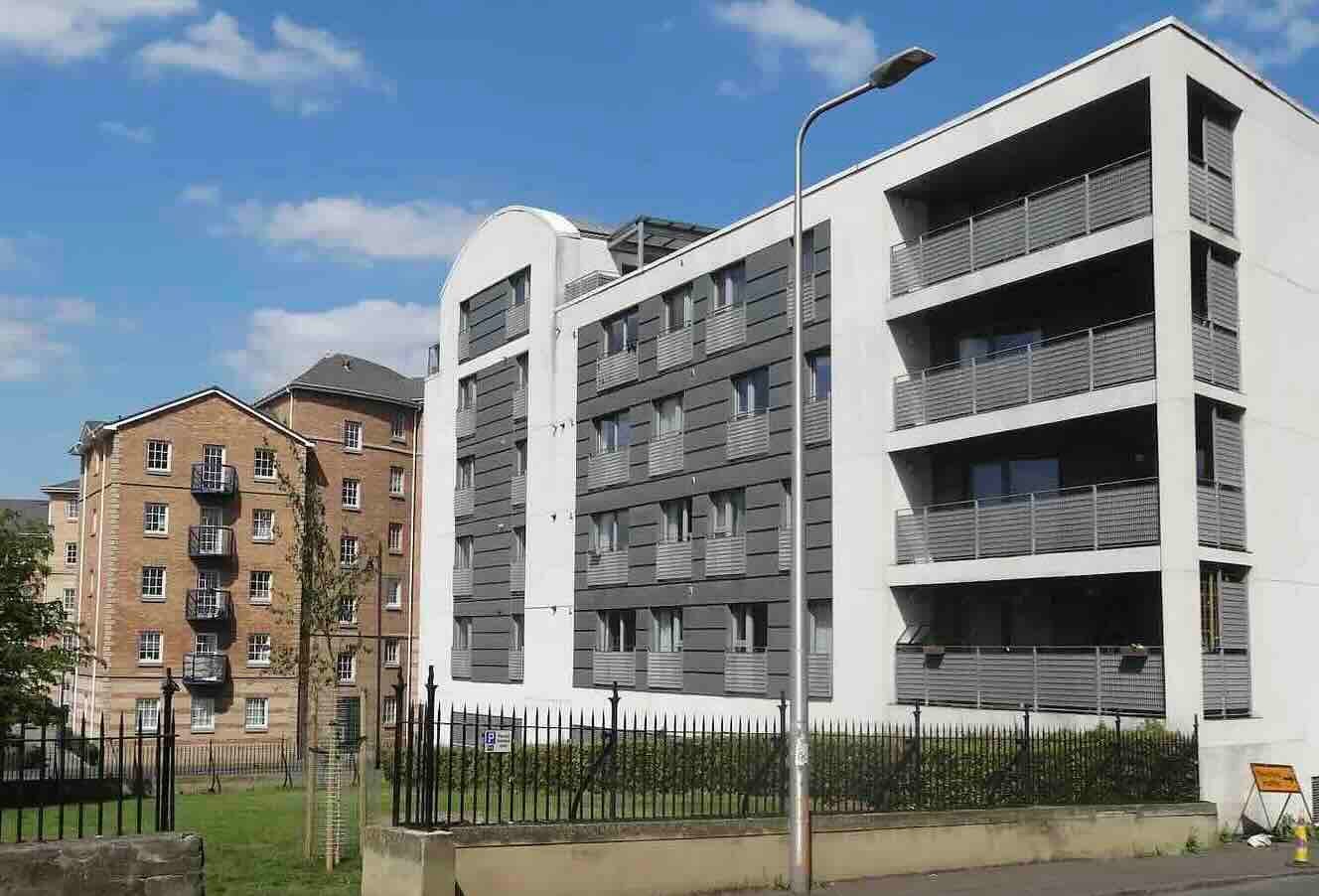
Image details: Leith, Edinburgh; copyright Mike Wilson