

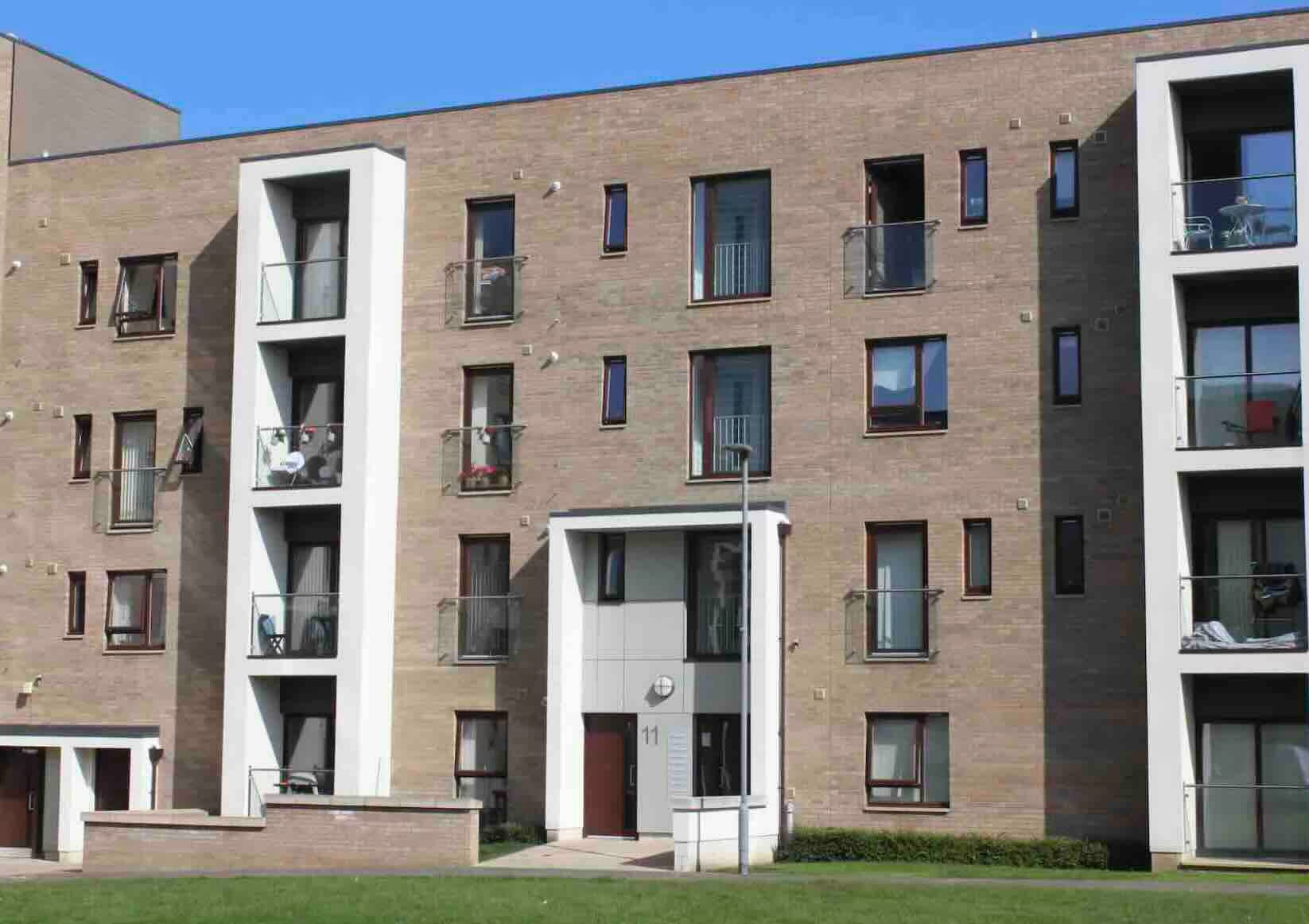
A ‘REVOLVING loan fund’ - provided, say, by the Scottish Government, to support a group of people build their own housing - would save households having to cash in any property they might own and, in the meantime, move into temporary accommodation.
But there seems to be a reluctance to make it happen, with the government’s self-build loan fund - here - aimed at individual households, rather than clusters of them.
If that’s because collective self-build is considered too risky, relatively-recent census data suggests it might be far from it.
Particularly if the self-build housing was to be aimed primarily at older people, the census held in March four years ago found (here) that around two-thirds of Scots householders, aged 65 or over, owned their own homes outright.
The finding is part of a wider figure that 34 per cent of all Scots households own their own home outright.
In other words, the risk of anyone defaulting on a commitment to self-built housing has to be considered extremely small.
But the ownership data is only one of several sources of information why government - either local or national - might consider the funding of housing that has been designed by the residents themselves and then moved into after it has been completed.
On March 20 four years ago - the day of the 2022 Census - some 70.3 per cent of all Scots households (equivalent to 1,763,000 households) were considered to have more bedrooms than ‘required’.
In other words, if sold, those ‘bigger’ properties might well yield an income that at least approximates to the cost of constructing smaller (but arguably more attractive) replacements.
Potentially, again, little risk of a loan not being paid back (to then be returned, into the system, ie making the loan ‘revolving’).
Of course, any revolving loan fund would need the resources necessary for it to be vigorously marketed.
And according to a report (here) published even more recently (on November 26 2024) than the details of the Census 2022, there is genuine work to be done in making sure that people - particularly older people - know that a collective self-build option even exists.
Concluded a taskforce set up by two UK Government departments (Health and Social Care and also Housing, Communities and Local Government), there is a lack of good-quality information when it comes to older people choosing what housing to potentially move into next.
Says (here) Our Future Homes - Housing that promotes wellbeing and community for an ageing population: “There is a clear need for accessible, impartial and good-quality information, advice and advocacy for senior citizens, their families and carers to ensure they understand the range of housing options available to them, can appraise these against their own priorities and can pursue their preferred solutions – with help, if needed.”
Of course, a revolving loan fund can be accompanied by other forms of support, including architectural and planning input and funding to carry out some basic administration (such as the hire of meeting rooms or the setting up of an eNewsletter account).
Plus assistance with any later management of a project, such as the equity system that prevails in housing structured as a Mutual Home Ownership Society.
It should not have to the case that every resident-designed housing group has to first walk through fire before it can get even close to succeeding.
As if anyone needs reminding, collective self-build can help make people feel valued, establish and strengthen bonds of trust between neighbours, reduce loneliness and deliver informal social care. Plus encourage the sharing of resources (such as power tools and perhaps even cars) and make sure there is a robust maintenance and repair regime in place.
And before anyone accuses collective self-build as a middle-class construct, regulation insists that a significant fraction of new housing developments is made available at an ‘affordable’ price or rent.
Indeed, The City of Edinburgh Council is now asking for a minimum 35 per cent of new homes - as revealed (here) in its city plan for the year 2030 - be ‘affordable’, up from the previous 25 per cent.
These ‘affordable’ homes don’t necessarily have to be reserved for older people - though, of course, they could be.
Should prospective residents demand to live in a multi-generational setting, there’s nothing to stop them; because collective self-build is about residents deciding: what they want from their homes in terms of both design and their management.
Mike Wilson is editor of BuildEdinburgh
Image details: Pilton Drive; copyright Mike Wilson